


Romanesque churches and abbeys still shape Provençal landscapes. Their architecture reflects the religious and economic renewal of the eleventh and twelfth centuries and draws on ancient forms.
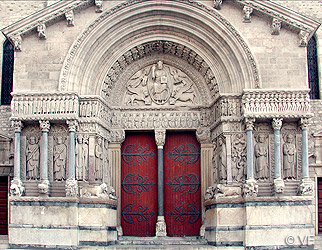
Saint-Trophime cathedral
An age of religious building
Economic and urban renewal was accompanied by extensive religious building. Provençal Romanesque architecture drew particularly on ancient forms still visible in southern towns. Abbeys, monasteries and churches bear witness to this flourishing period.
Early Romanesque buildings
An early phase of Romanesque art developed in the eleventh century.
Buildings preserving traces of it include Vence cathedral, Notre-Dame du Brusc near Grasse, the churches of Saint-Donat and Saint-Martin in Volonne, and the crypt of Vilhosc.
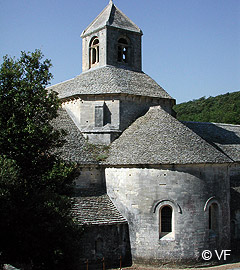 Sénanque abbey
The flourishing of the twelfth century
In the twelfth century, Romanesque art flourished in many monuments:
– Saint-Trophime in Arles and Notre-Dame des Doms in Avignon;
– the churches of Valréas, Pernes, Le Thor, Saint-Paul-de-Mausole, Moustiers-Sainte-Marie and Cavaillon;
– the abbey churches of Montmajour, Le Thoronet, Sénanque and Silvacane;
– Saint-Honorat des Alyscamps, Saint-Gabriel near Tarascon, Saint-Quenin in Vaison and Notre-Dame d’Aubune in Beaumes-de-Venise. Some of these buildings were altered in later centuries.