


Eighteenth-century Provence experienced a major health crisis as well as periods of economic expansion. Maritime trade and manufacturing transformed Marseille and other parts of the region.
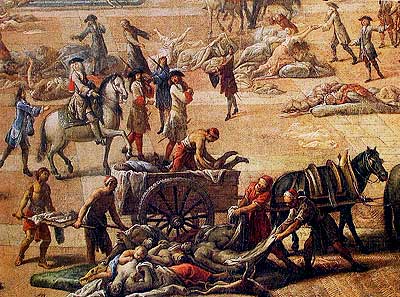 The Marseille plague of 1720
The arrival of plague in Marseille
In May 1720, the Grand-Saint-Antoine returned from the Levant and entered Marseille's harbour. Suspicious deaths had occurred during the voyage. Health measures and quarantine failed to prevent the spread of plague, amid negligence and strong commercial pressures.
The epidemic of 1720–1722
The epidemic of 1720–1722 killed tens of thousands in Marseille and neighbouring areas. Estimates suggest that it claimed nearly half of Marseille's population. It also struck Aix-en-Provence, Arles, the Alpilles and Avignon. Sanitary cordons and restrictions on movement attempted to contain it.
Trade and manufacturing
During the eighteenth century, Marseille expanded its Mediterranean trade and its connections with the West Indies and India. Manufacturing was closely tied to commerce: soap, candles, glass, faience, sugar and textiles. Development remained uneven across Provence and neighbouring areas, including the paper mills of the Comtat Venaissin and the faience workshops of Moustiers.
Despite the crises, the century experienced periods of prosperity. Churches, houses and urban mansions reflect the growing wealth of some families and changes in artistic taste.