


War, migration and economic change have shaped modern Provence. Its landscapes and cultural heritage belong to a region that continues to evolve.
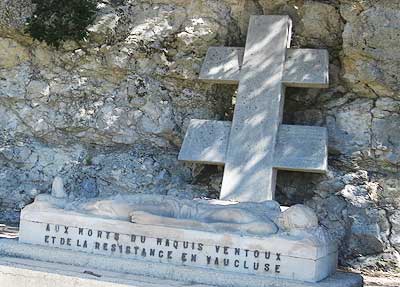 Monument to the Resistance in the Vaucluse
War and places of remembrance
Provence's modern history is closely connected with that of France. Both world wars left deep traces, reflected in monuments, places of remembrance and accounts of the Resistance.
Migration and social change
During the twentieth century, economic and demographic changes transformed the region. Marseille was one of the main arrival points for people repatriated from Algeria in 1962. Migration from the Maghreb and other countries added to earlier Italian, Spanish and Armenian immigration. People followed many different paths of settlement and brought a wide range of cultural contributions.
Economic change and the region’s appeal
From the 1970s, the decline of some industries and changes in port trade weakened employment in several areas. At the same time, tourism, services and new activities grew. Political alignments shifted; from the 1980s, the far right gained ground in parts of the region. These developments took place in varied economic, social and political contexts.
 Lavender in Haute Provence
Climate, landscapes, heritage and cultural practices contribute to Provence's appeal. Urban growth, new forms of mobility and economic change continue to reshape the region. Its history carries on through these transformations and the passing on of its heritage.