
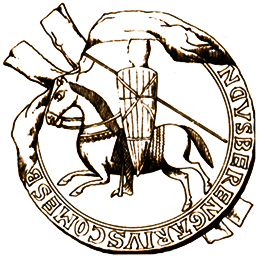
 / Seal of the counts of Provence
As royal authority weakened, comital families and local lords strengthened their power. The office of count became hereditary and feudal structures developed.
Between the ninth and eleventh centuries, Provence belonged to successive political entities arising from the division of the Carolingian Empire. As part of the kingdom of Burgundy, it came under the sovereignty of the Holy Roman Empire in 1032. Imperial authority remained distant, while Provence's counts and great families exercised increasing power.
From the late tenth century, population and agriculture gradually recovered. Uncultivated land was brought back into use, marshes were drained and trade grew. Monasteries contributed to this process and to spiritual and intellectual renewal. They accumulated large estates and became major actors in Provençal society.
In the early twelfth century, marriages and inheritance divided power among several lineages, notably the houses of Barcelona and Toulouse and the counts of Forcalquier. The county and marquisate of Provence were distinct entities. Rivalries were frequent, but the strengthening of princely authority also accompanied economic development.
Sources and further reading: Historical research: Provence as an imperial territory from 1032.