


The Pont d’Avignon, also known as the Saint-Bénézet bridge, preserves four arches over the Rhône. Its history, floods and the legend of Bénézet explain why this once-complete bridge no longer joins the two banks.
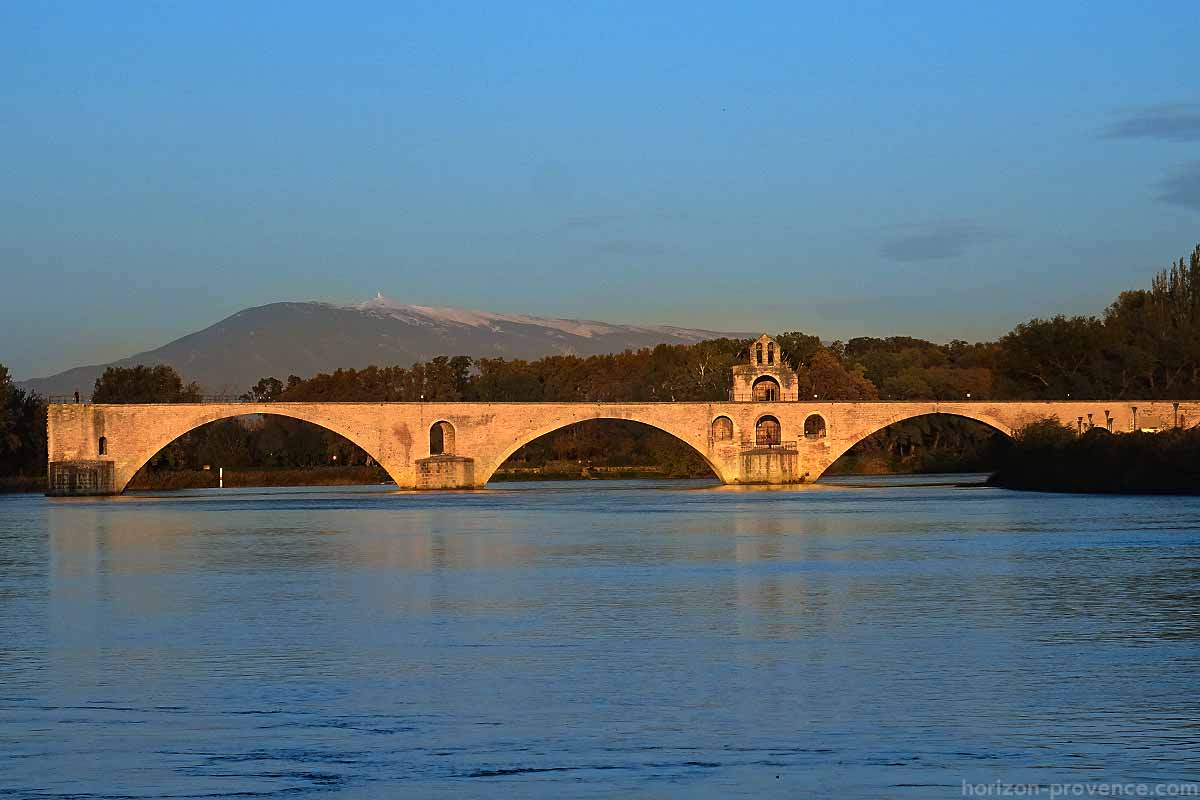
The four elegant Romanesque arches of the Pont Saint Bénézet have become the city's emblem, thanks to the famous nursery rhyme that has popularized it around the world. The Avignon bridge has made twice the fortune of the Provençal city. According to legend, this bridge that crossed the arms of the Rhône was built in the Middle Ages thanks to a simple shepherd, a child, the shepherd Bénézet (little Benoît), who gave it his name. The only stone bridge over the Rhône between Lyon and the Mediterranean Sea, it then made the fortune and power of the city of Avignon, built as an almost independent Commune, under the distant and benevolent suzerainty of the Counts of Toulouse
Why does the Pont d’Avignon stop halfway across the Rhône?
The bridge was completed in the Middle Ages and once crossed the Rhône. Repeated floods damaged its arches, making repairs increasingly difficult and costly. It was eventually abandoned in the seventeenth century; the four surviving arches are the remains of the former crossing.
History of the Pont d'avignon
The bridge was built on the initiative of the shepherd Benezet, who gave it his name. This simple shepherd from Vivarais managed to convince the city's notables and collected the necessary funds for its construction. Work began in 1177, at the probable location of an ancient ruined Roman bridge, the work was completed eight years later in 1185.
The Romanesque bridge has 22 arches and is nearly one kilometre long, crossing both arms of the Rhône up to the Tour Philippe-le-Bel in the village of Saint André, soon to be called Villeneuve. Its pavement is 4 metres wide.
It was a monumental work for the time. It is the only stone bridge over the Rhône between Lyon and the Mediterranean Sea. It attracts travellers, merchants and industrialists. The taxes collected on goods make the fortune of the Commune of Avignon.
The bridge was partially destroyed in 1226 after the siege of Avignon by King Louis VIII of France. But it is quickly rebuilt. The religious order of the Pontifical Friars, created by Saint Bénézet, is responsible for the maintenance and renovation of the bridge, which is often damaged by the floods of the Rhône river.
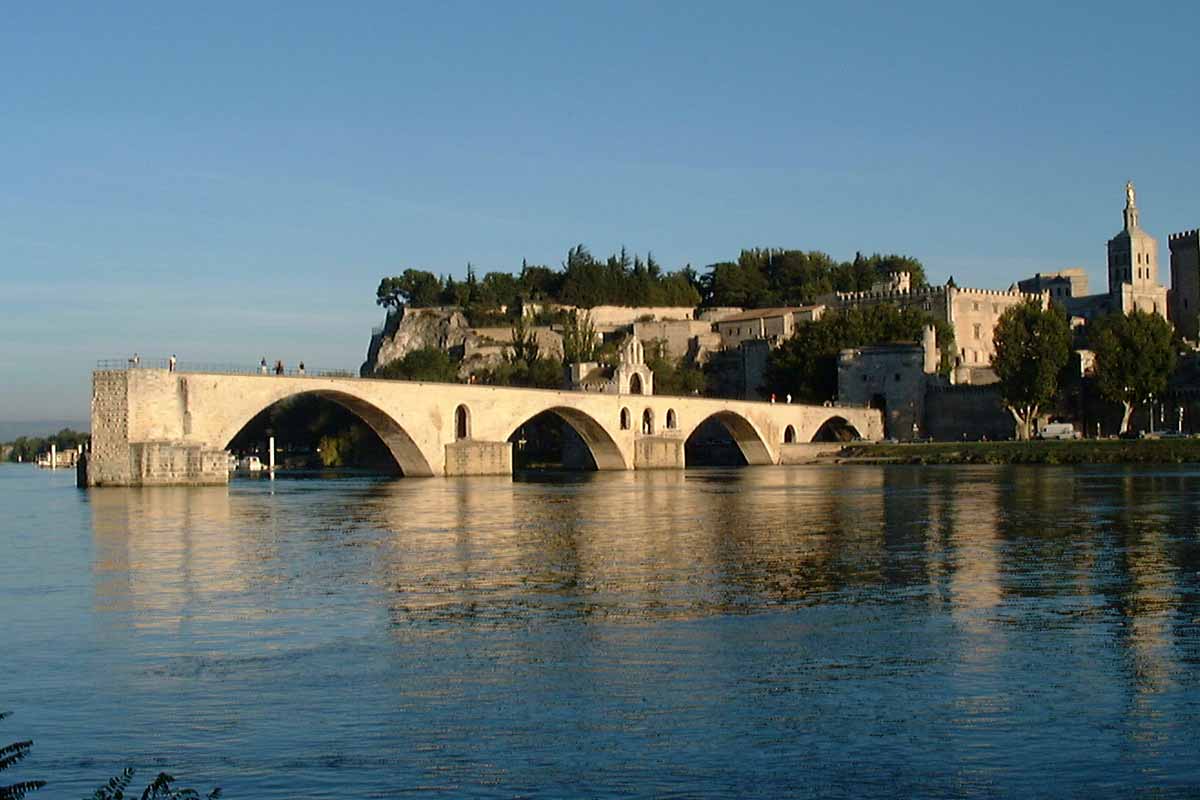
Then why was the Pont d'Avignon destroyed? In the 17th century, the bridge was damaged and required constant repairs, which were soon too expensive. The stone arches washed away by the floods were replaced by wooden footbridges, then the bridge was permanently abandoned. In 1674, its last arches threatened to collapse, so much so that the relics of Saint Bénézet were moved from the Saint Nicolas chapel to the church of Les Célestins. Many times repaired, the bridge was expensive to maintain for the inhabitants of Avignon, and was finally abandoned a few centuries after its construction to the destructive floods of the Rhône.
Today there are still four arches, consolidated in the 19th century, with the Saint Nicolas chapel, dedicated to the brotherhood of the Nautonniers. It became an icon of Avignon. Its fame brings many visitors every year.
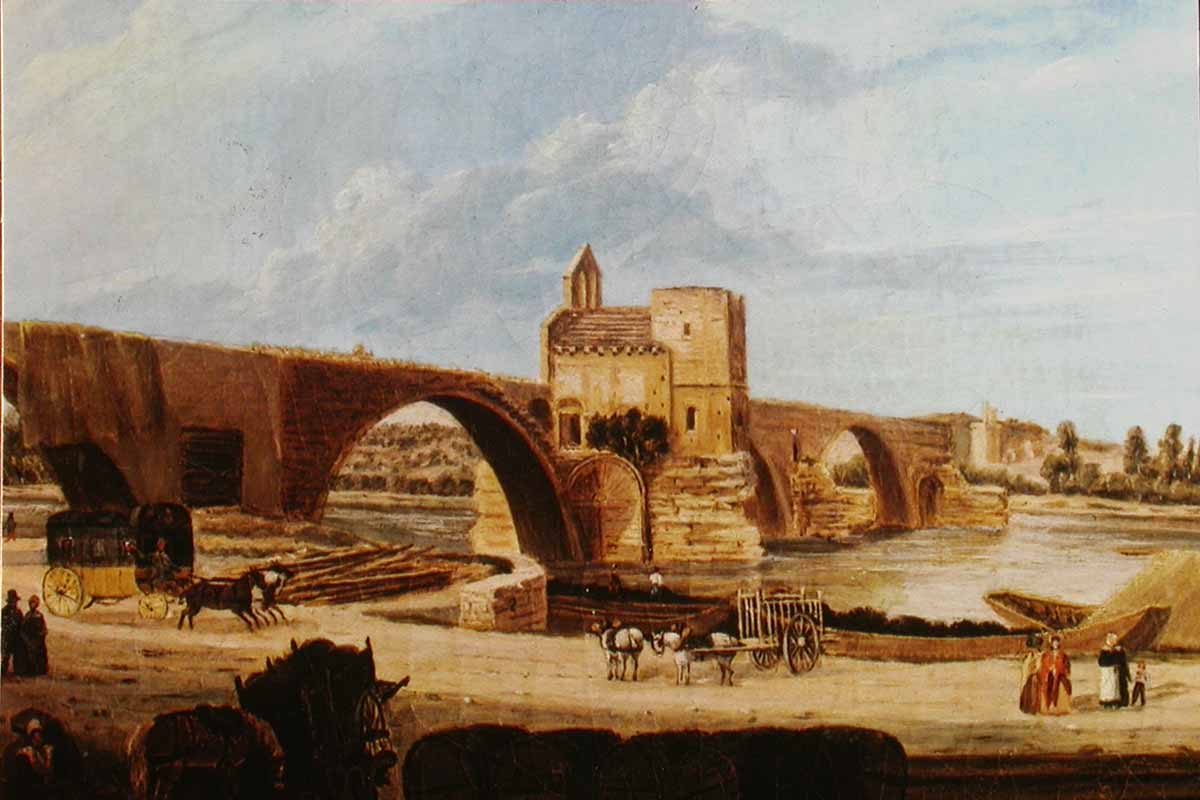
Pont d'Avignon in 1840 - anonymous - Calvet Museum of Avignon
Digital reconstruction of the Pont d'Avignon in the Middle Ages
Saint Bénézet
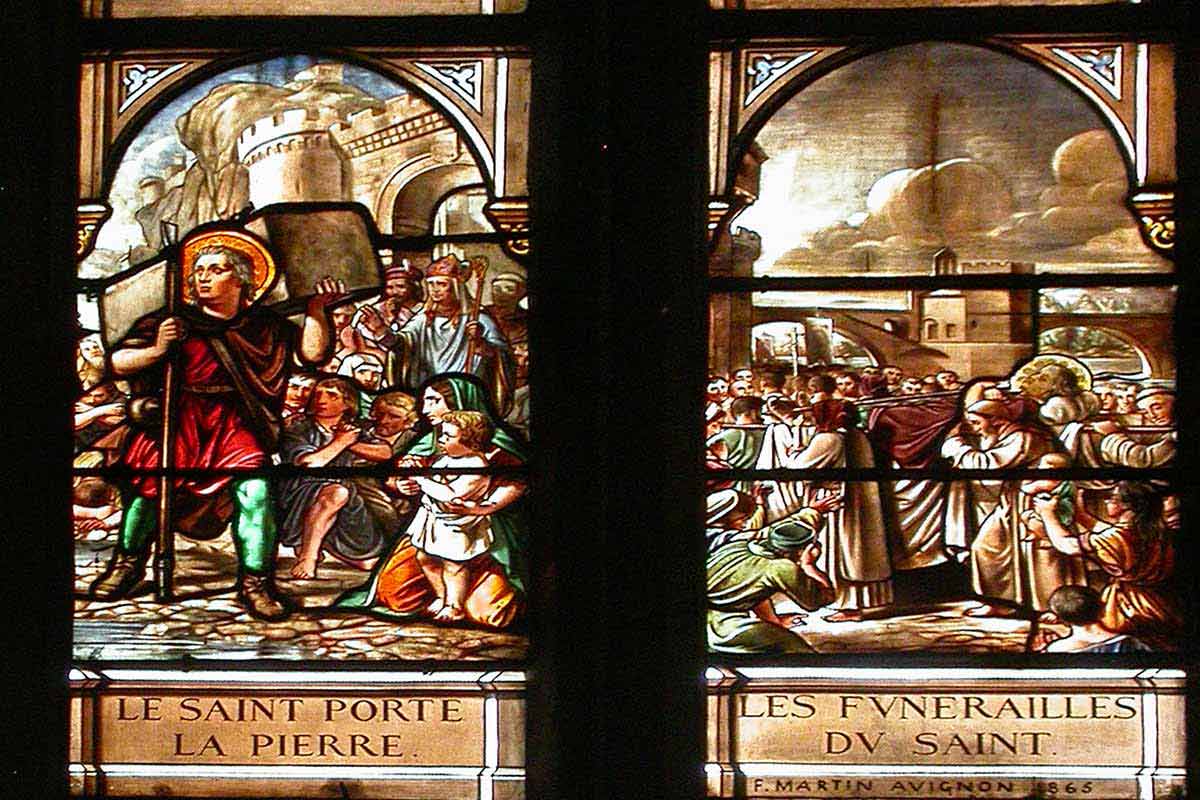
Saint Bénézet is a child, a simple shepherd of the Vivarais - in the mountains of the Ardèche. At the age of twelve, he had a vision: Jesus Christ ordered him to build a bridge over the Rhône. He immediately went to Avignon and addressed the bishop of the city directly during his sermon in the cathedral. To overcome the scepticism of the bishop and the audience, he lifted a huge stone and threw it into the Rhône where it would serve as the foundation for the first pier of the bridge. Convinced of the divine will, the inhabitants supported the young shepherd and helped to build the bridge.
In fact, Bénézet was not the builder, but rather a fundraiser, endowed with an exceptional charisma. He founded the order of the pontifical brothers (brothers of the bridge), in charge of collecting the money necessary to accomplish his divine plan. They peddle the beautiful legend that is supposed to touch the hearts of the faithful and generate a surge of generosity.
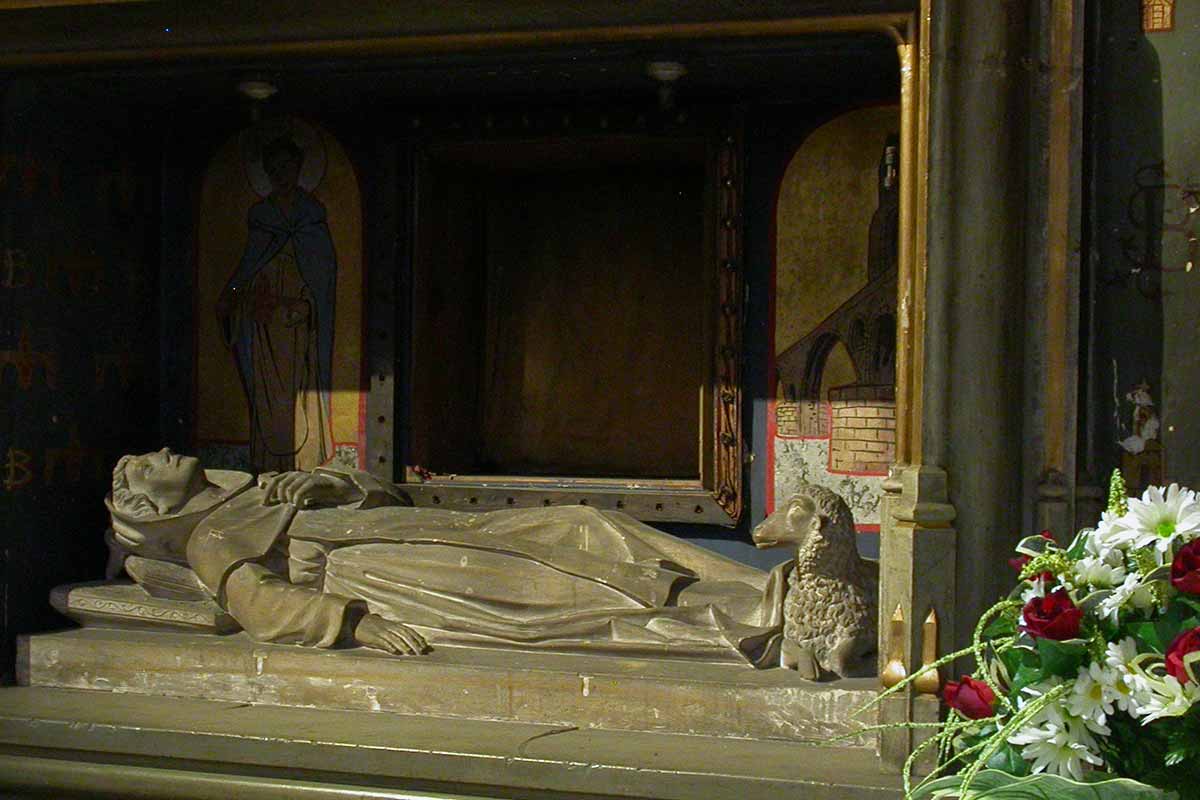
Benezet died of exhaustion in 1184, at the age of only 19, a year before the completion of his work. His remains are stored in the Saint Nicolas chapel on the bridge. He is the subject of strong popular devotion, and although he has never been officially canonized, he has been considered a saint since the 13th century. In 1674, in front of the dilapidated state of the bridge, his remains were transferred to the cloister of the Celestines, then in 1854 to the church Saint Didier in Avignon.
The Pont d'Avignon in photos : slideshow
-
The arches of the Saint-Bénézet bridge in evening light

The arches and Saint-Nicolas chapel on Avignon bridge
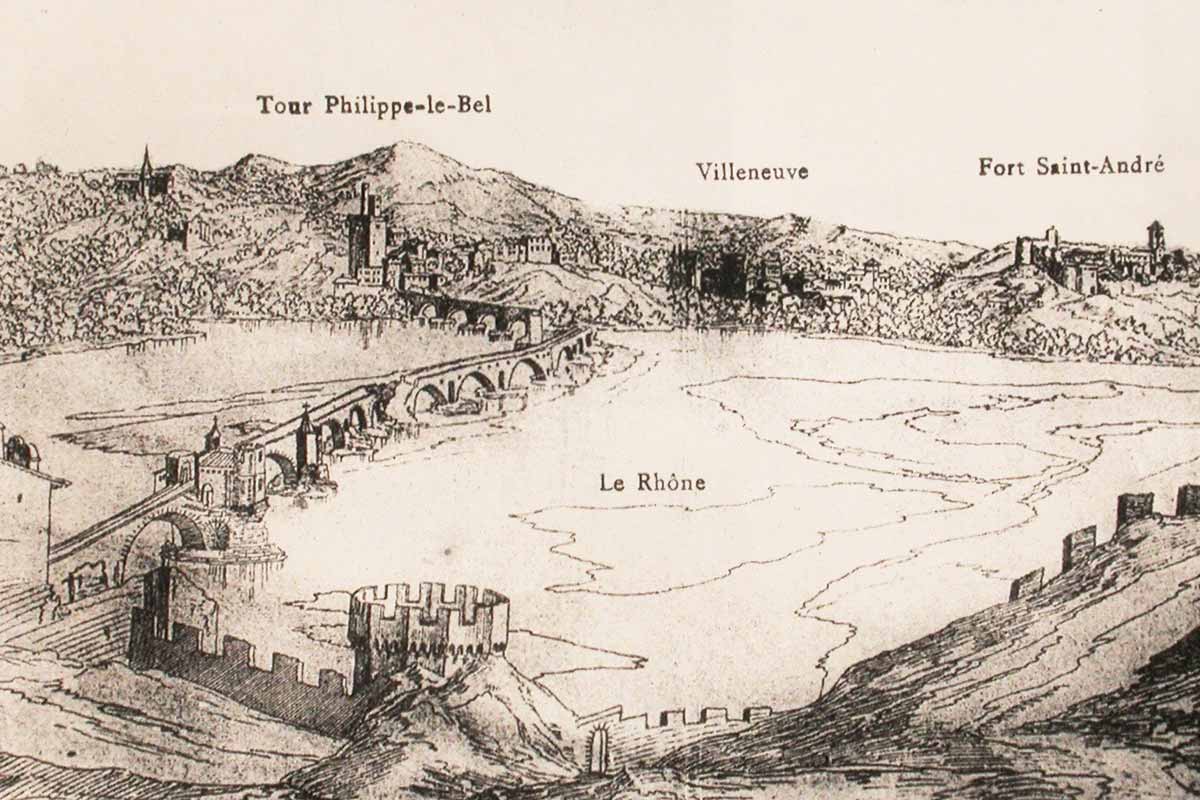
An old drawing of the Saint-Bénézet bridge attributed to Father Martellange
-
Avignon bridge in 1840, an anonymous painting in the Calvet Museum
-
A stained-glass scene from Saint Bénézet’s life in Saint-Didier church
-
The effigy of Saint Bénézet in Avignon’s Saint-Didier church
-
The Saint-Bénézet bridge below Avignon’s walls and the Palais des Papes
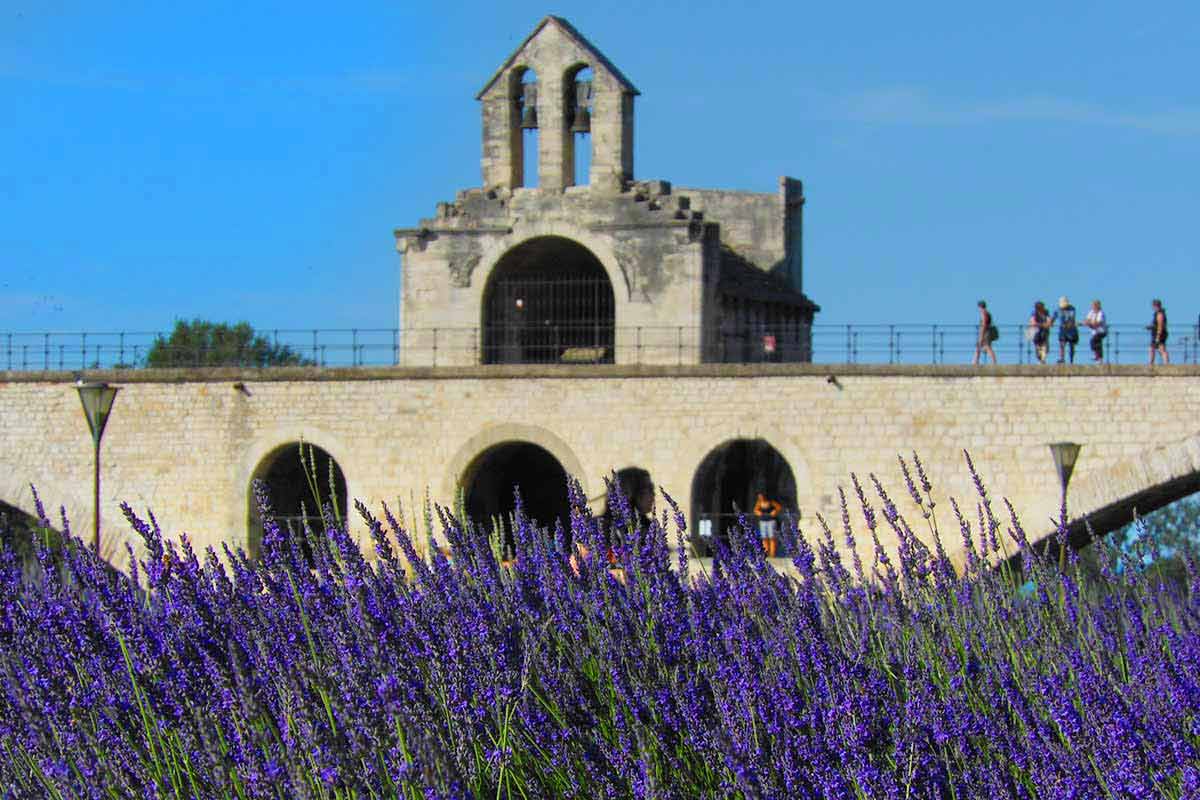
Lavender in front of Saint-Nicolas chapel on Avignon bridge
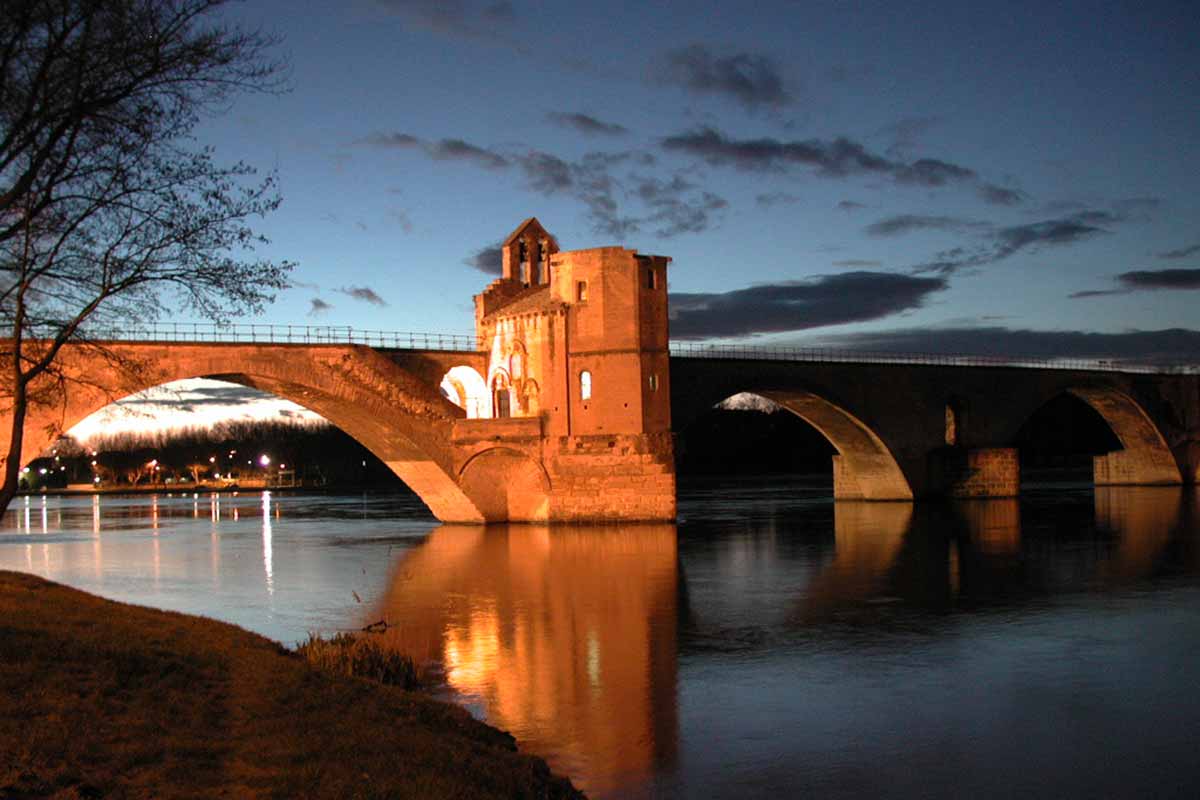
The illuminated Saint-Bénézet bridge at dusk
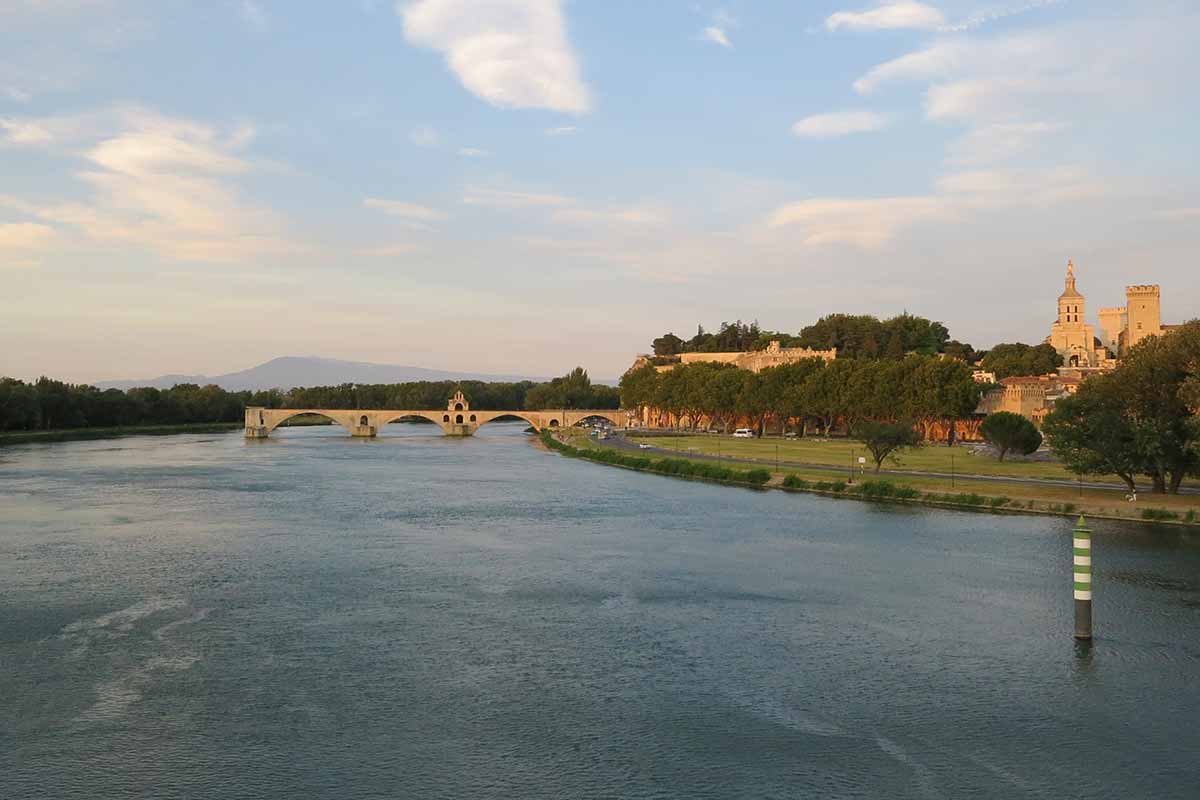
The Rhône and Saint-Bénézet bridge seen from the Daladier bridge
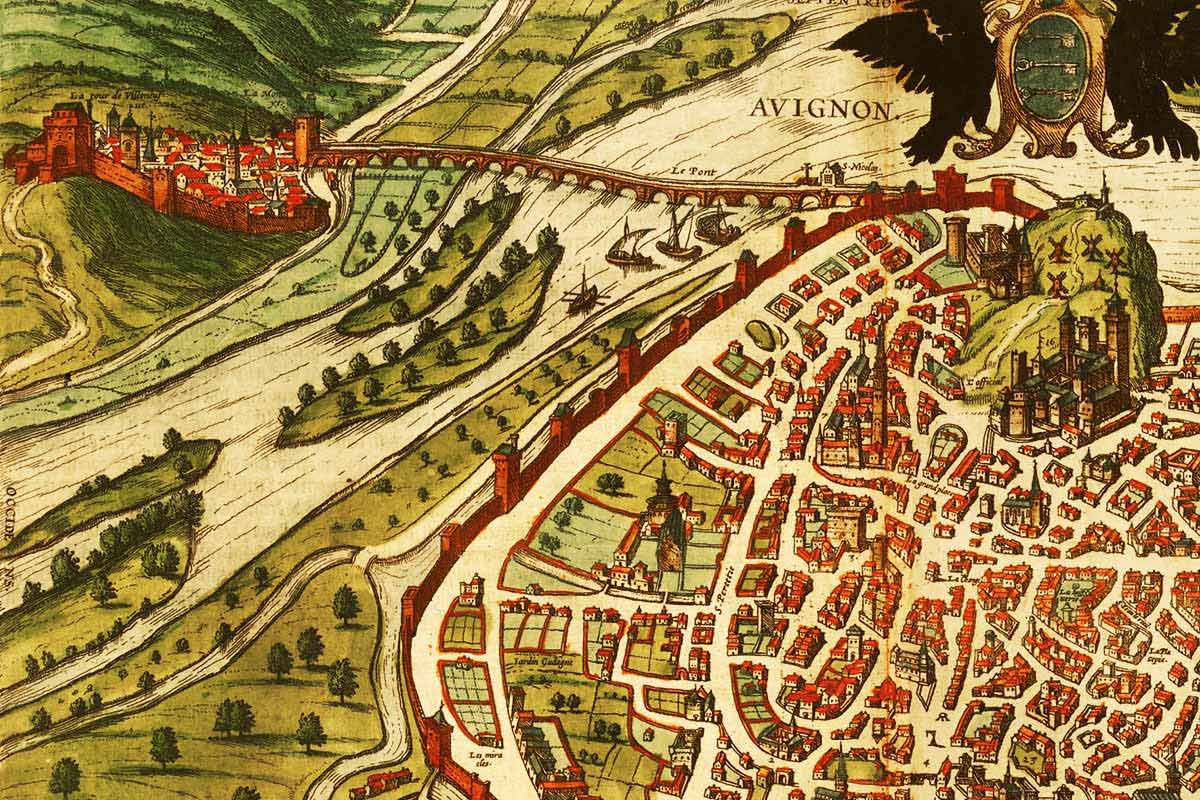
Avignon bridge on the sixteenth-century Plan aux personnages
The song "Sur le Pont d'Avignon"
The origins of the song “Sur le pont d’Avignon” remain debated. It became popular in the nineteenth century, notably through Adolphe Adam’s opera-comique Le Sourd ou l’Auberge pleine, performed in 1853. The children’s round helped make the bridge famous around the world.
On the bridge of Avignon
Everyone is dancing
On the bridge of Avignon
Everyone is dancing in a circle.
The handsome men go like this.
And they go like that.
On
the bridge of Avignon
Everyone is dancing
On the bridge of Avignon
Everyone is dancing in a circle.
The beautiful women go like this.
Then they go like that.
On the bridge of Avignon
Everyone is dancing
On the bridge of Avignon
Everyone is dancing in a circle.
The gardeners go like this.
Then they go like that.
On the bridge of Avignon
Everyone is dancing
On the bridge of Avignon
Everyone is dancing in a circle.
The tailors go like this.
Then they go like that.
On the bridge of Avignon
Everyone is dancing
On the bridge of Avignon
Everyone is dancing in a circle.
The wine-growers go like this.
Then they go like that.
On the bridge of Avignon
Everyone is dancing
On the bridge of Avignon
Everyone is dancing in a circle.
The launderers go like this.
Then they go like that.
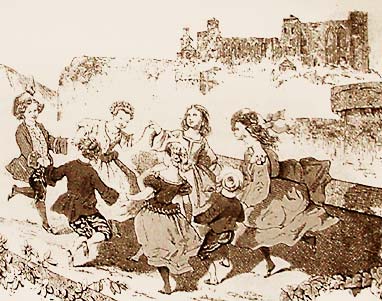
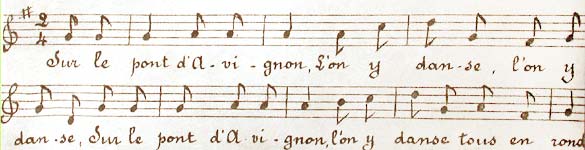
and so on ... with a bit of imagination you can invent new verses and sing for hours
Practical information
Website of the Pont d'Avignon where you will find up-to-date information: opening hours and prices: avignon-pont.com
The bridge is open throughout the year, with opening hours that vary by season. Check the official opening times and admission prices before your visit. The site has facilities for visitors with reduced mobility; consult the accessibility information to plan your visit.
The Avignon Tourisme tourist office offers themed tours at certain times of the year, upon reservation.
Coming to Pont Saint-Bénézet
GPS coordinates: N 43° 57' 14'' - E 4° 48' 17''
Coming by car: The nearest car park (about 300 meters) is the Parking du Palais des Papes (for a fee). The free park-and-ride car parks on Ile Piot (on Ile de la Barthelasse), and the Parking des Italiens are located a 15-minute walk (1.3 km) from the Pont d'Avignon
Enjoy your tour of Avignon :
Getaway · Guest Houses in Provence PortalThe Pont d’Avignon, four arches and two chapels spanning the Rhône Explore further with my articles in the Getaways section of the Guest Houses in Provence Portal: The Pont d’Avignon, four arches and two chapels spanning the Rhône.
Continue your walk through Avignon at the Place de l’Horloge, its town hall and theatre.