
![Haute Provence [fr]](/images/version_francais.gif)
![Haute Provence [en]](/images/version_english.gif)
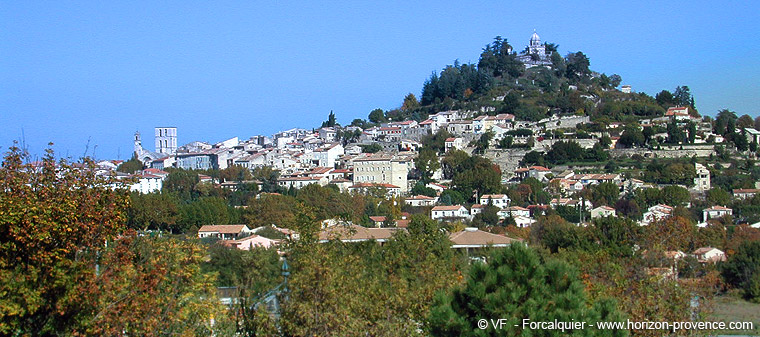
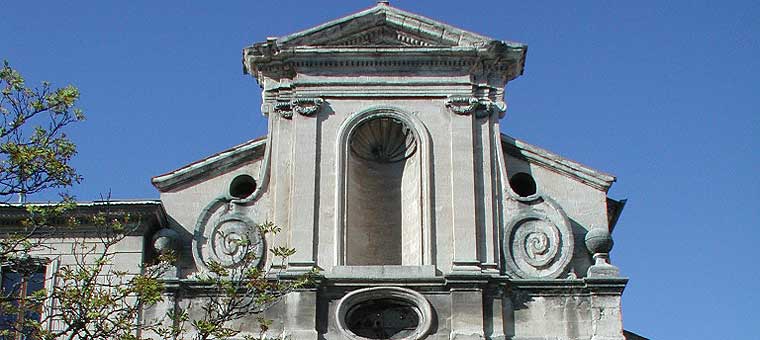
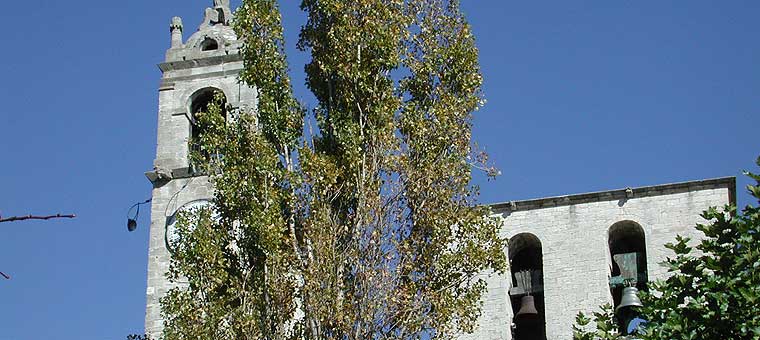
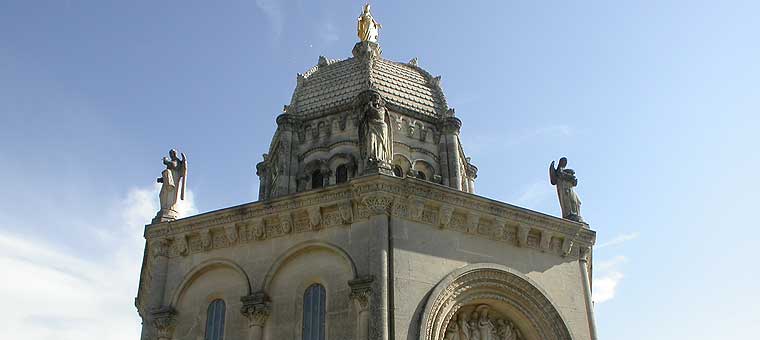
The town of Forcalquier does not lack character. It spreads nonchalantly on the steep slopes of a cone-shaped hill, crowned by the chapel dedicated to Notre-Dame de Provence.
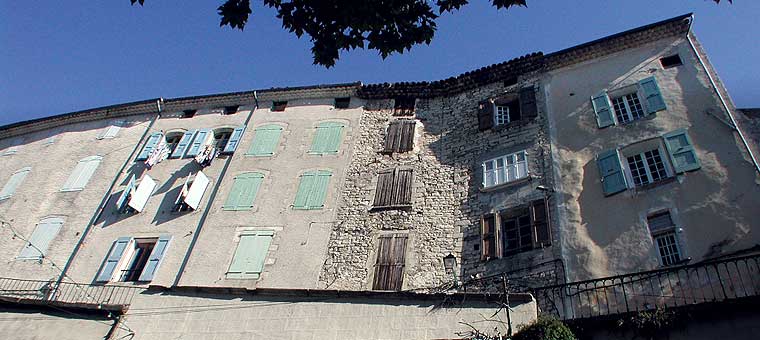
Forcalquier has also inherited character from its history, it was in the Middle Ages the seat of one of Provence’s three counties, capital of a quasi-independent state, extending across Haute-Provence and the Luberon. The little city has kept a flavour of aristocratic savoir-vivre, given by the façades of the houses in the old part of the city.
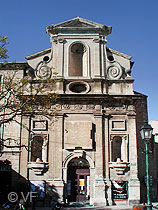
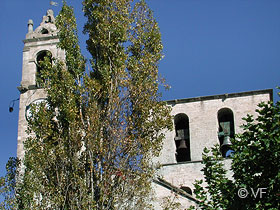
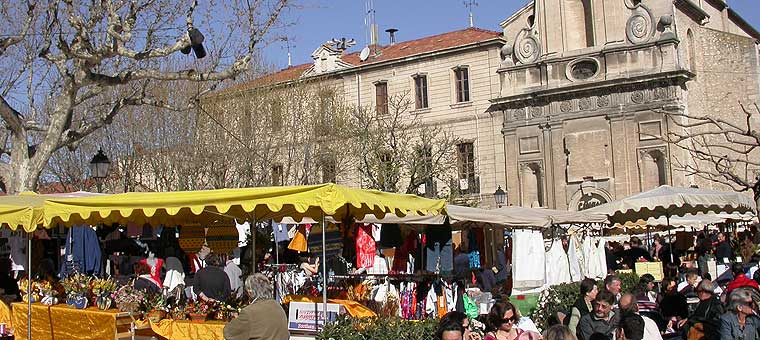
Forcalquier stands on the route of the ancient Via Domitia, a vital way of trade and communication linking Italy to Spain. The weekly market of Forcalquier is one of the largest and liveliest in the region.
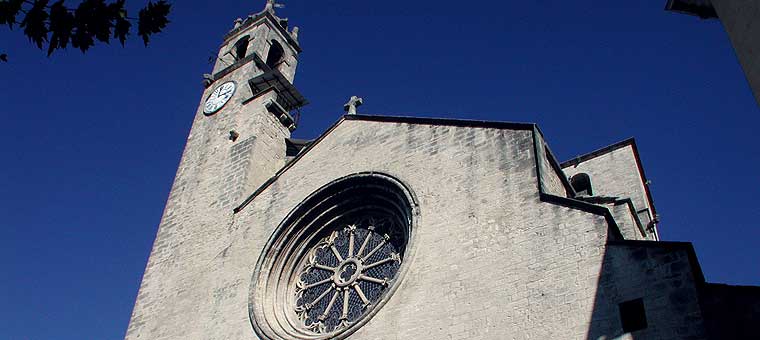
The living centre of Forcalquier is the "place du Bourguet", heart of the city, filled with the market each Monday morning. The square is bordered by the road and the massive shape of the cathedral Notre-Dame du Bourguet. On the opposite side, we notice the old convent of the Visitandines now converted to town hall and cinema.
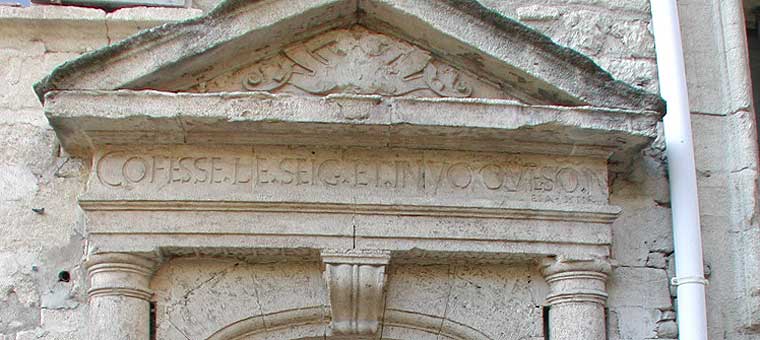
Winding and narrow streets in the old town of Forcalquier are nice to walk through. Old houses have very nice wooden doors and door frames, showing the wealth of their owners in the past, but now a bit decrepit and sometimes restored.
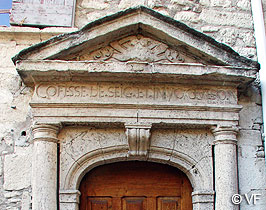
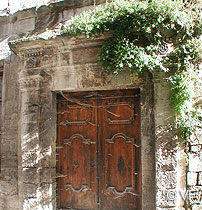
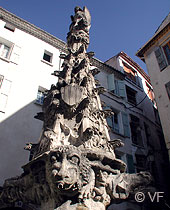
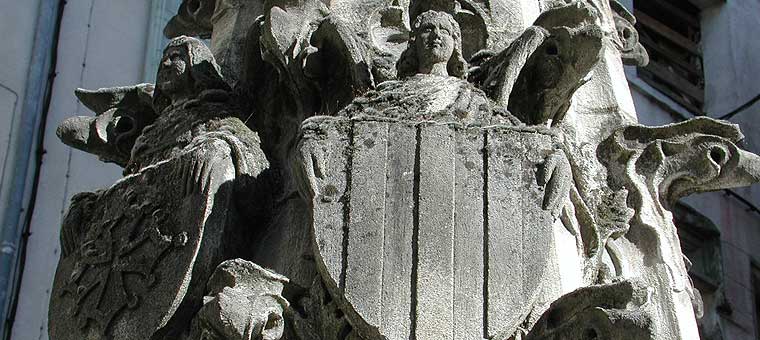
On the Saint Michel square stands a beautiful fountain in Gothic style, erected in 1512. It shows some curious bas-reliefs that you can interpret for yourself.
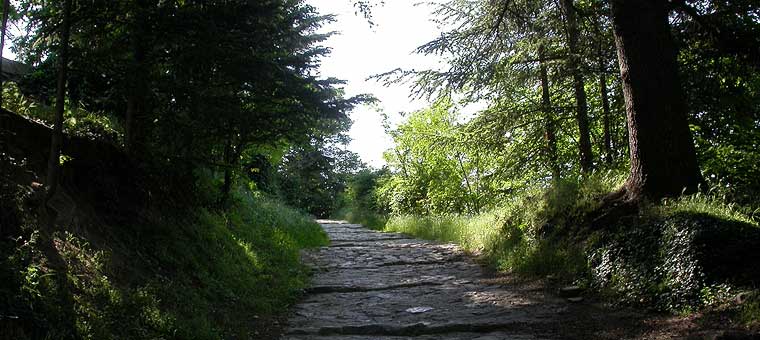
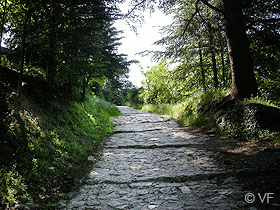
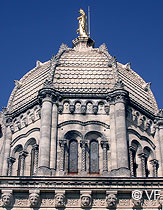
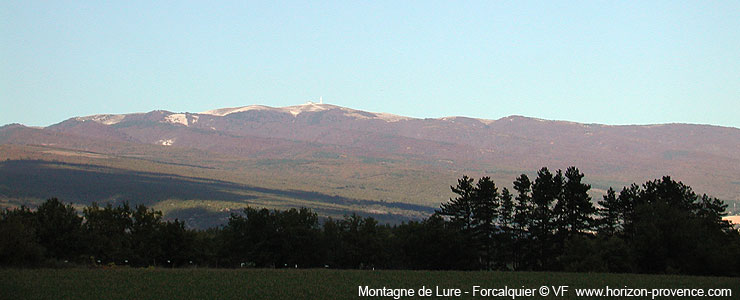
The ascent of the hill shaded with pines is easy. At the top stands the chapel Notre-Dame de Provence, built in 1875 in neo-Byzantine style. The outlook upon the region is splendid : to the north over the Lure mountains, to the south over the eastern Luberon, and to the east over the white summits of the Alps.
History of Forcalquier
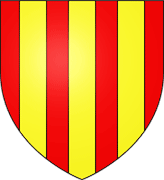 First
mention of Forcalquier dates from the 9th century; the town grew around a fortified castle. Following a dispute, Sisteron’s
bishop settled in Forcalquier and gave its church the unusual status of co-cathedral.
First
mention of Forcalquier dates from the 9th century; the town grew around a fortified castle. Following a dispute, Sisteron’s
bishop settled in Forcalquier and gave its church the unusual status of co-cathedral.
Forcalquier became the capital of a county extending across the Luberon and Haute-Provence. The town developed and had up to 10,000 inhabitants.
In the 13th century, the earl Raymond Bérenger V married each one of his four daughters to four kings, creating the « legend of the Four queens ». The second daughter, Eleonore, married King Henry III of England.
The town’s importance declined when the counties of Forcalquier and Provence were united by marriage. It became part of the kingdom of France in 1481. 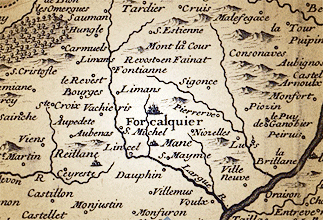
Forcalquier suffered during the Wars of Religion and the bloody conflicts between Catholics and Huguenots.
Subprefecture of the department of the « Basses-Alpes » after the Revolution, Forcalquier is one of the few centres of resistance to the coup d’Etat of the future Napoleon III, resistance harshly punished.
Forcalquier is still a cultural and trading centre of the region. The city benefits from the economic dynamism of the Durance valley, and develops also with tourism.
Les Mourres
Around Forcalquier are many picturesque villages : Mane, Dauphin, Cruis, Saint-Étienne-les-Orgues, Lurs, … just to mention some of them.
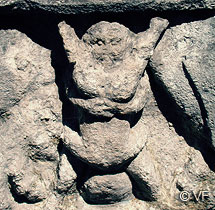
A few kilometers from Forcalquier, on the road to Fontienne, we see on the left side of the road some curious geological formations. They are called the "Mourres" a Provençal word meaning "head" or "face".
Those rocks, shaped by rain and wind are very expressive indeed. They are remnants of an ancient lake whose limestone deposits were sculpted by erosion.
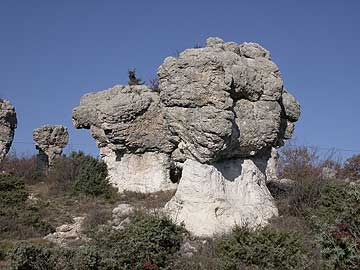
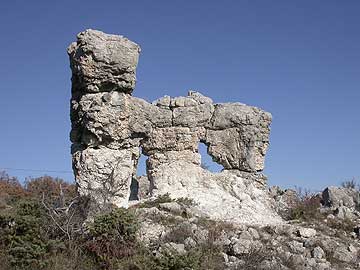
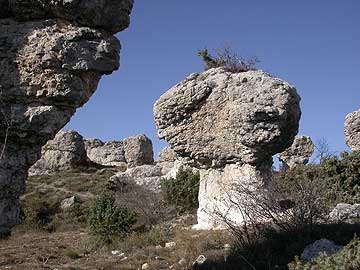
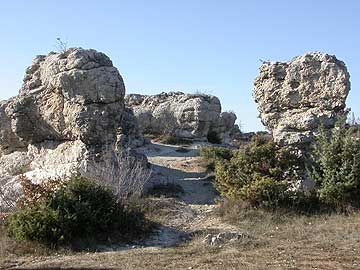
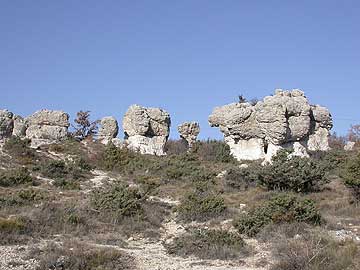
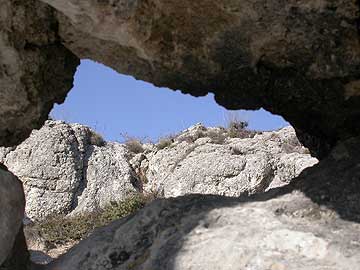
Getting to the Mourres near Forcalquier : GPS location N 43°58'58'' - E 5°46'27''
Accommodation in Forcalquier
 Choose a guest
house in Forcalquier on the Provence bed and breakfast portal
Choose a guest
house in Forcalquier on the Provence bed and breakfast portal
Getting to Forcalquier
GPS coordinates : N 43°57'31'' - E 5° 46'48''
Forcalquier location : altitude 545 metres above sea level, 4600 inhabitants, 2 miles from Mane, 6 miles from Sigonce , 7 miles from Dauphin, 8.5 miles from Ongles, 11 miles from Saint-Etienne-les-Orgues, 14 miles from Manosque, 15 miles from Banon , 20 miles from Simiane-la-Rotonde, 25 miles from Apt, 28 miles from Sisteron, 48 miles from Aix-en-Provence, 60 miles from Avignon