


Stroll in the village of Lussan
Lussan is located north of Uzès on the road to Barjac. Impossible not to notice the village as the road approaches it. Lussan is perched on a narrow limestone plateau, protected by walls, as a motionless sentinel watching all the surrounding countryside: beautiful landscape of fields, woods and scrubland dotted with hamlets, with the Cèze valley to the north and Mount Bouquet to the west, while the summit of Mont Ventoux emerges far over the hills to the east.
Only one road leads to the village, protected by a medieval imposing 15th-century castle, which houses now the Town Hall. An earlier castle stood a hundred yards north of the village, of which only a few walls and a solitary well remain. The name of Lussan comes from the Gallo-Roman name Lucius, a former owner of the village. A large menhir on the territory of the commune (5.6 m) attests to the presence of man since the earliest times.


Lussan is a Protestant village, its inhabitants suffered during the Camisard Wars after the revocation of the Edict of Nantes in 1685. The Protestant church was destroyed, the inhabitants then gathered for clandestine services in the countryside. A battle was fought at the foot of Lussan between the king’s dragoons and camisards led by Jean Cavalier. The temple was rebuilt in the early 19th century.
The village with old stone houses is quiet and peaceful. Lussan however, was a center of silk production in the 19th century: there were three spinning mills in the village, which had 1,600 inhabitants.
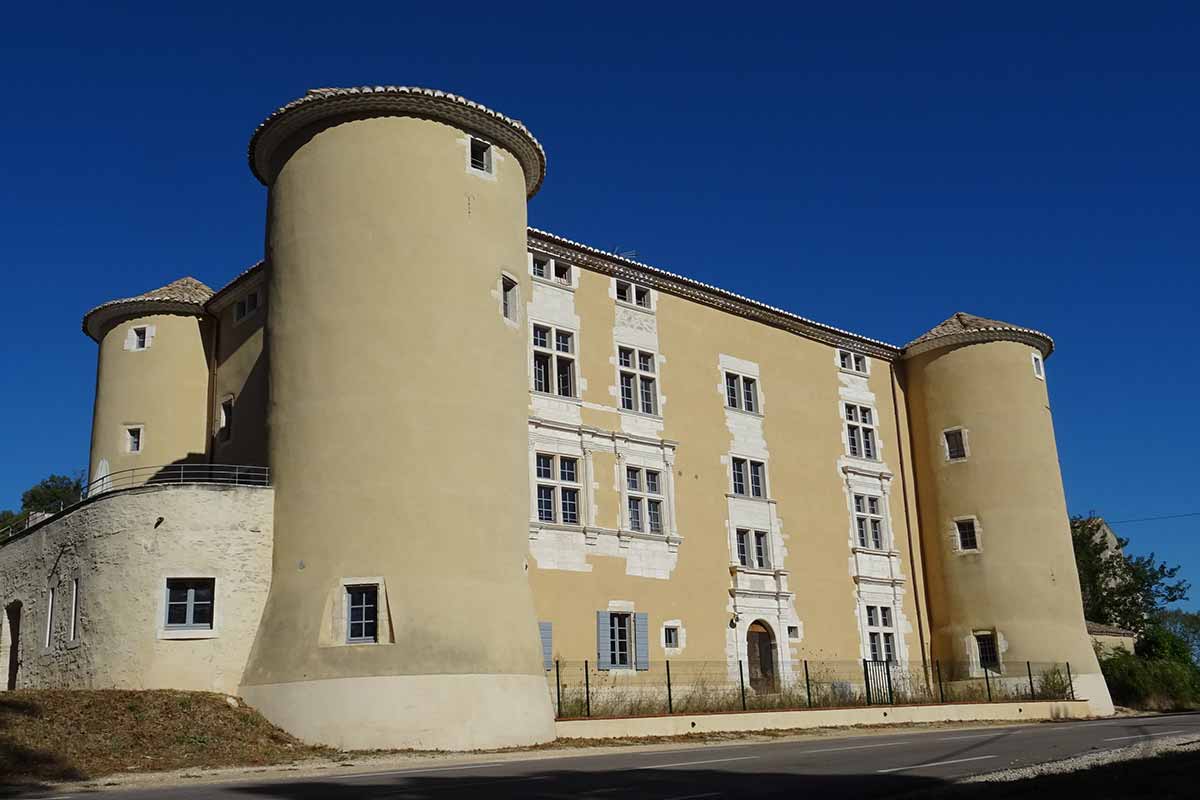
Lussan is the ancestral home of the Gide family. At the foot of the village, along the road to Barjac, stands a beautiful castle with a medieval appearance (16th century), the Château de Fan. The castle was bought by Théophile Gide, the great-grandfather of the famous writer André Gide, winner of the Nobel Prize for Literature in 1947. The castle acquired by the town in 1920 was a police station until 1980. The name of the castle "Fan" comes from the nearby spring where there was a Gallo-Roman temple (Fanum) dedicated to the nymphs. A statue was found in this area, it is located in the hall of City Hall.
Northeast of the village is the natural site of the Concluses, narrow and spectacular gorges formed by the Aiguillon river, whose flow is intermittent (dry in summer).
Photos of Lussan : slideshow
Lussan, listed among the most beautiful villages of France
Castle of Lussan
Lussan, listed among the most beautiful villages of France
Church Saint-Pierre in Lussan
Place du Verger in Lussan
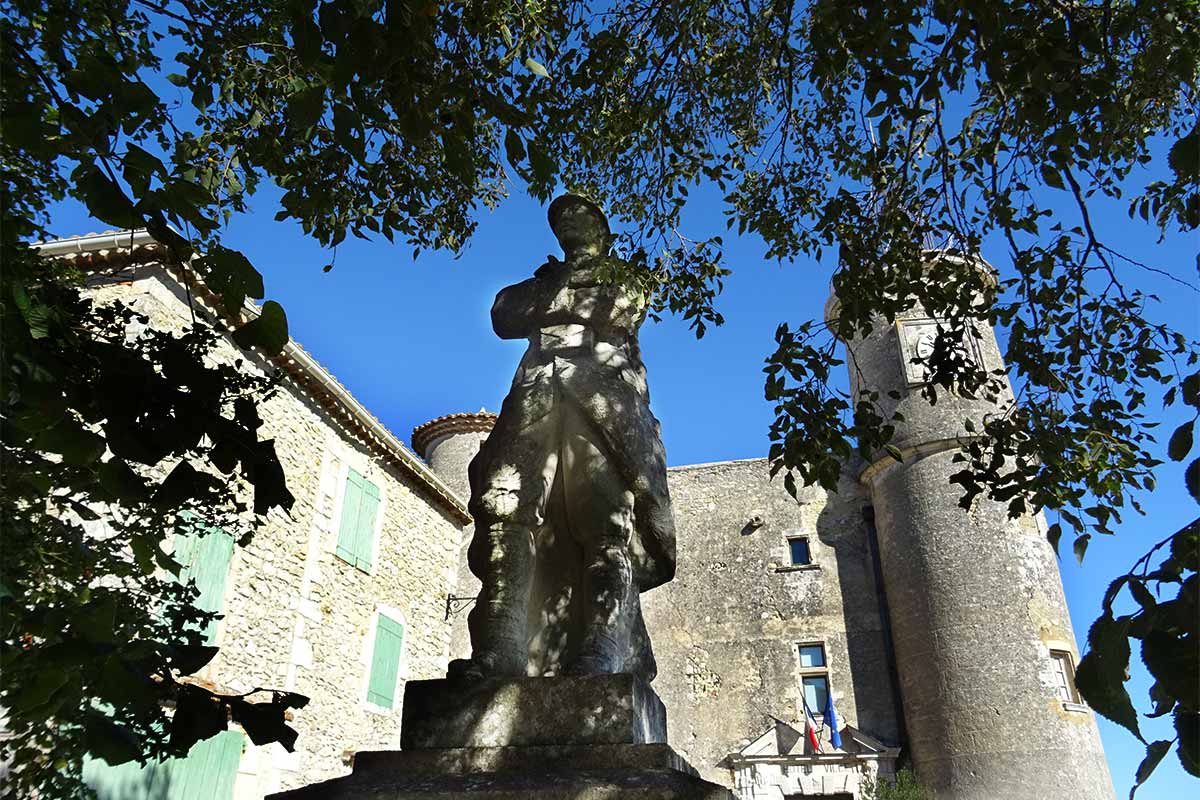
Lussan, the war memorial in front of the castle
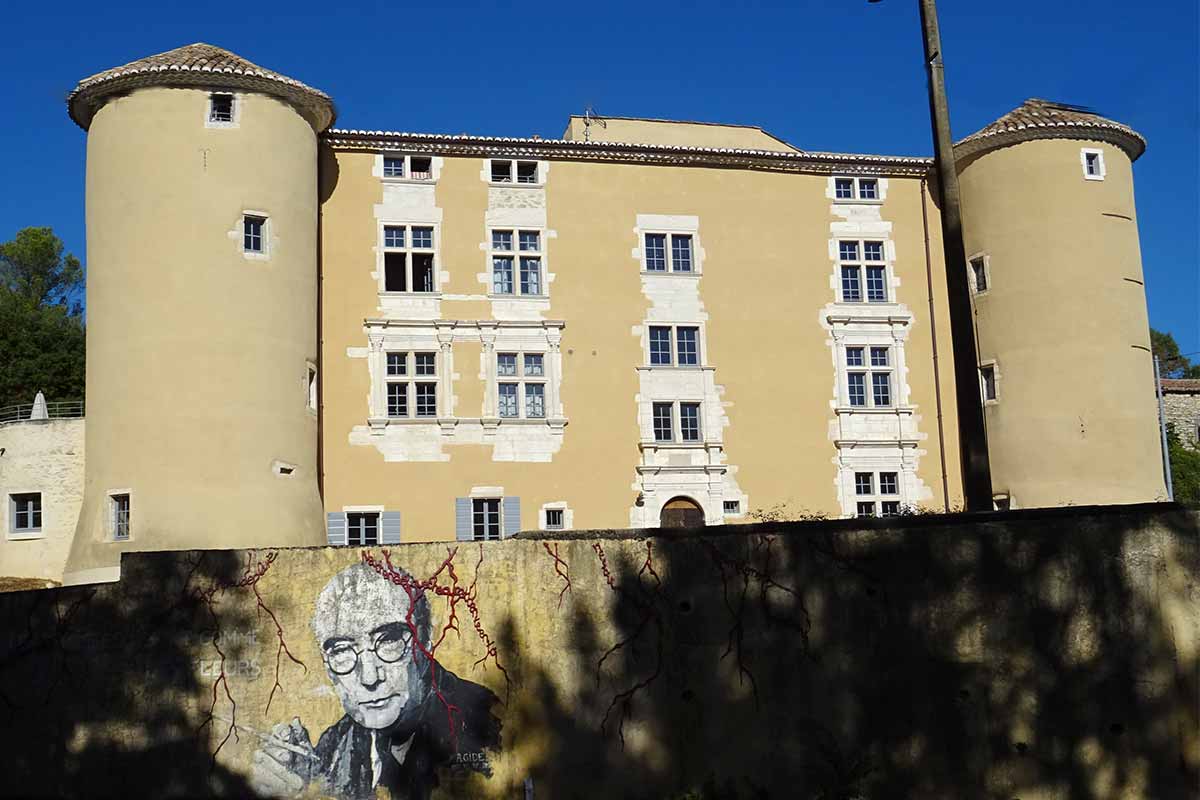
Château de Fan in Lussan, tribute to the writer André Gide
Château de Fan in Lussan
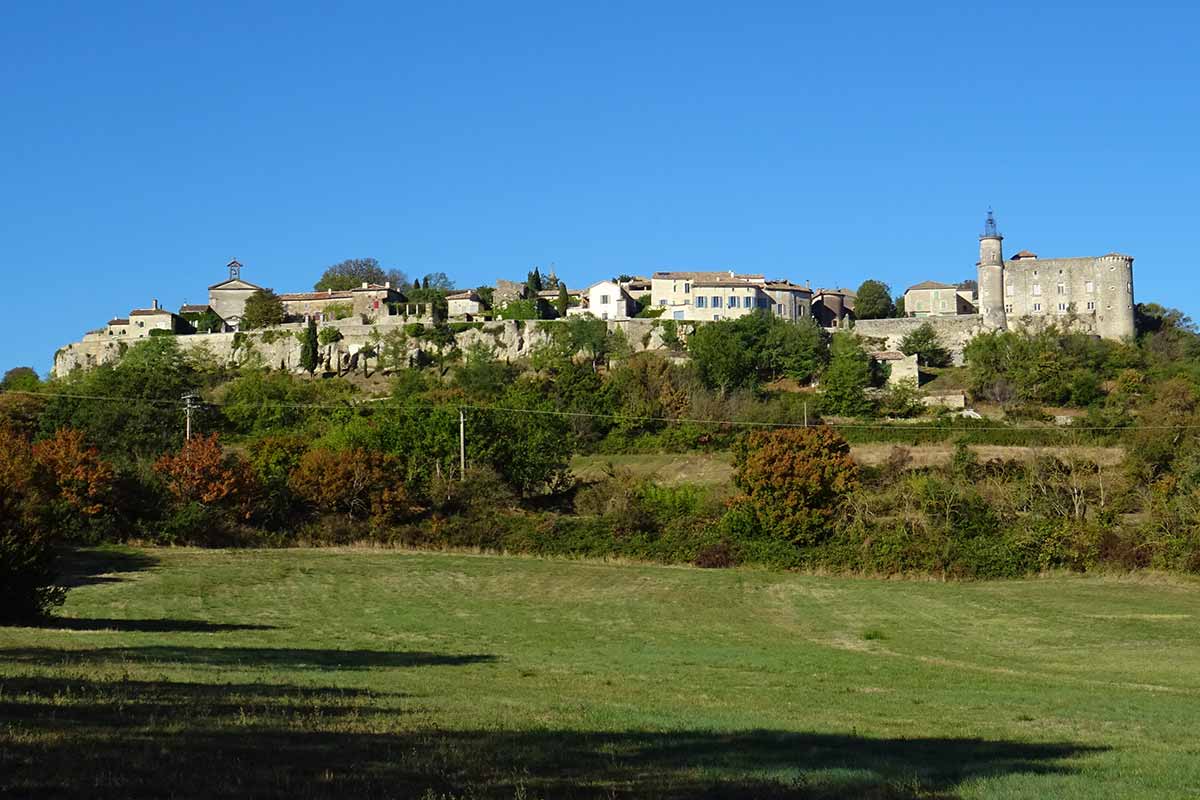
Lussan, listed among the most beautiful villages of France
Accommodation in Lussan and nearby
 Selection of guest
houses near Uzès and guest house near the Cèze
valley on the portal of the b&b in Provence
Lussan's official website : www.mairie-lussan.fr
Sights and activities:
- Medieval Village
- Castle of Lussan
- Castle of Fan
- The Concluses gorges
- Menhir of Lèque
Coming to Lussan
GPS coordinates N 44°09'09'' - E 4°21'57''
The town of Lussan is in the north of the Gard between Uzès and Barjac.
Lussan location : altitude 280 metres above sea level, 950 inhabitants, 6 miles from Saint-Laurent-la-Vernède, 7 miles from Saint-Quentin-la-Poterie, 10 miles from Goudargues, 11 miles from Uzès, 14 miles from Barjac, 19 miles from the Pont du Gard, 25 miles from Nîmes, 29 miles from Avignon