


The papal court’s departure changed Avignon’s role without ending its activity. It remained papal territory, a trading centre and an artistic hub alongside the kingdom of France.
A town of trade and art
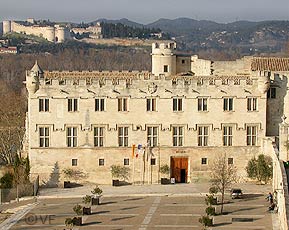 After the crises of the Western Schism, Avignon retained commercial, financial and artistic activity. Italian connections remained important. The court’s departure did not erase the legacy of the cardinals’ residences or the networks formed in the previous century.
The Petit Palais in Avignon © Vincent Flachaire
Papal government
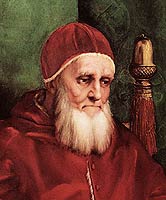 Legates and later vice-legates represented papal authority in Avignon. The neighbouring Comtat Venaissin had its own institutions. Giuliano della Rovere, the future Pope Julius II, left his mark in the late fifteenth century through the transformation of the Petit Palais and the town’s cultural influence.
Julius II, portrait by Raphael
Relations with the French crown
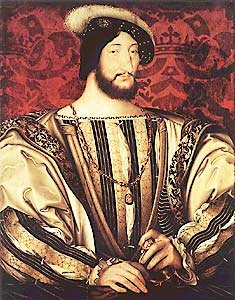 In 1481, Louis XI inherited the county of Provence. Avignon and the Comtat became enclaves within the French kingdom while remaining papal territories. In the sixteenth century, the Italian Wars and French interventions demonstrated their strategic importance.
Francis I, portrait by Jean Clouet
Under Francis I and his successors, royal letters granted inhabitants of Avignon and the Comtat rights of régnicolité. These provisions facilitated some relations and trade with France without annexing the territories.
Further reading: The union of Provence with France: René of Anjou to 1487.