
![Drôme provençale [fr]](/images/version_francais.gif)
![Drôme provençale [en]](/images/version_english.gif)
Visiting Grignan
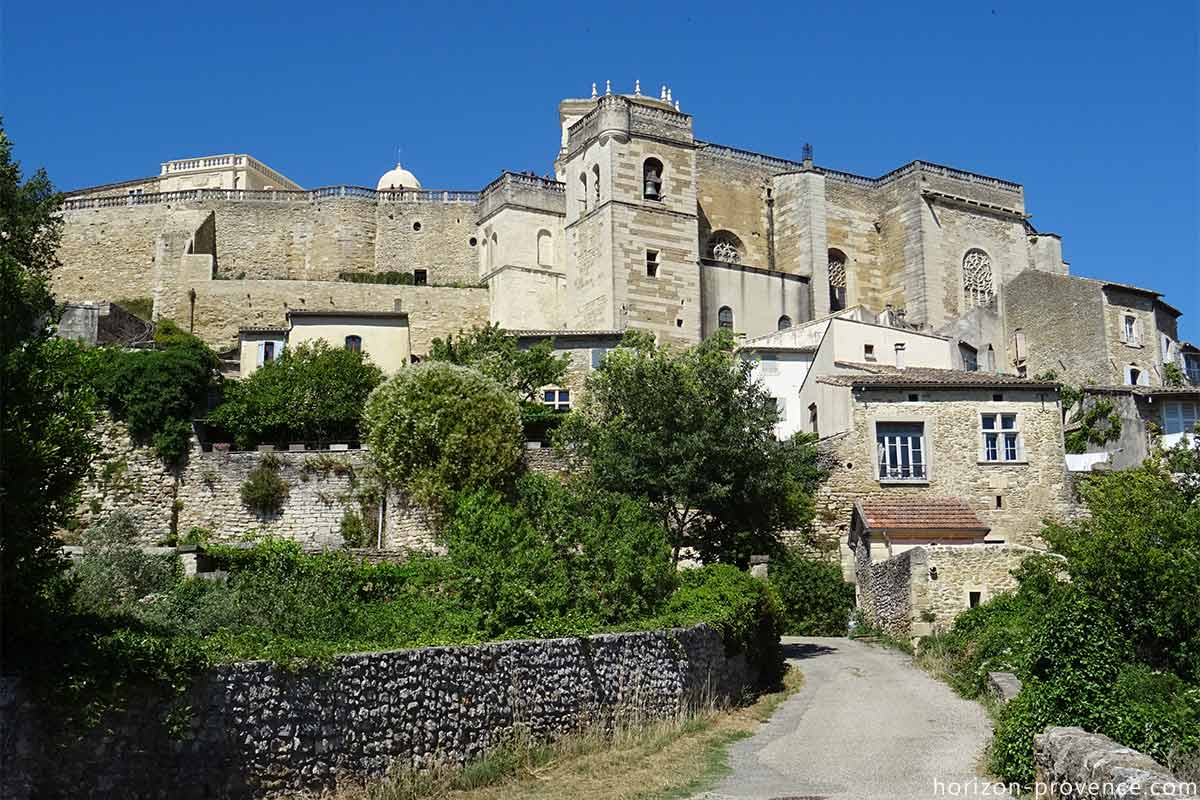
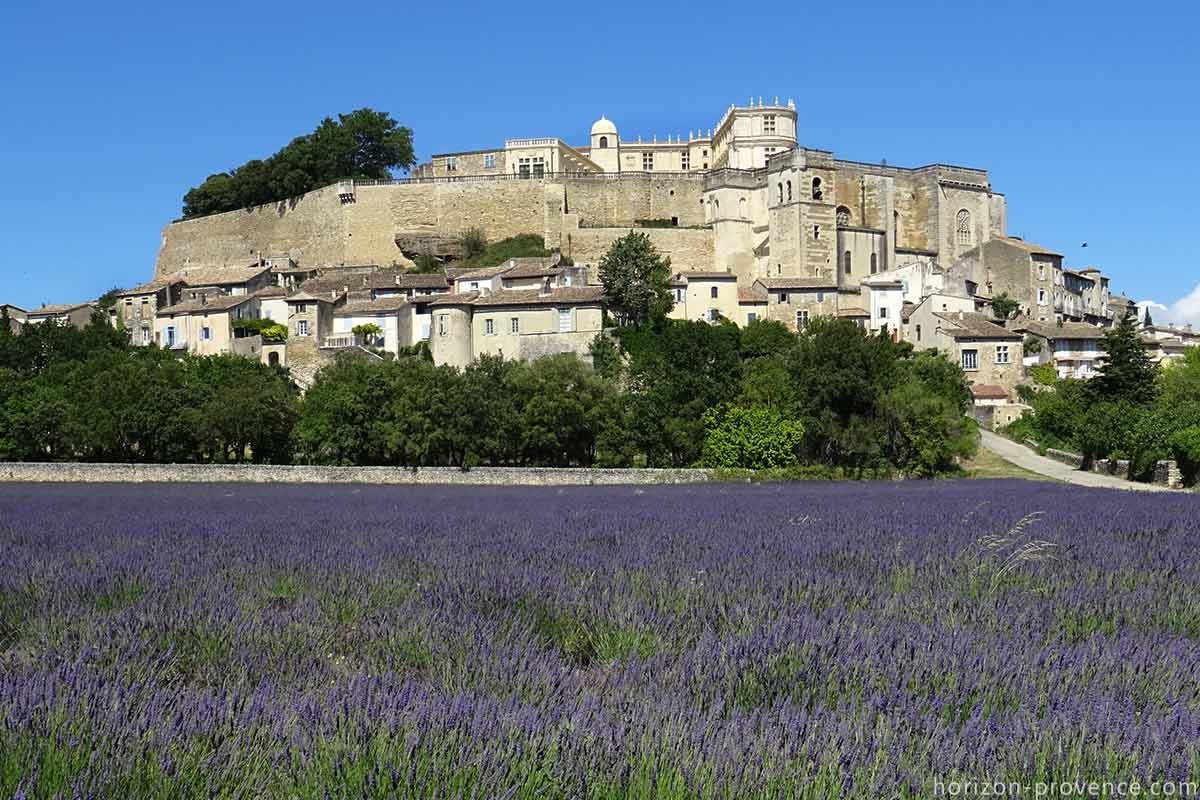
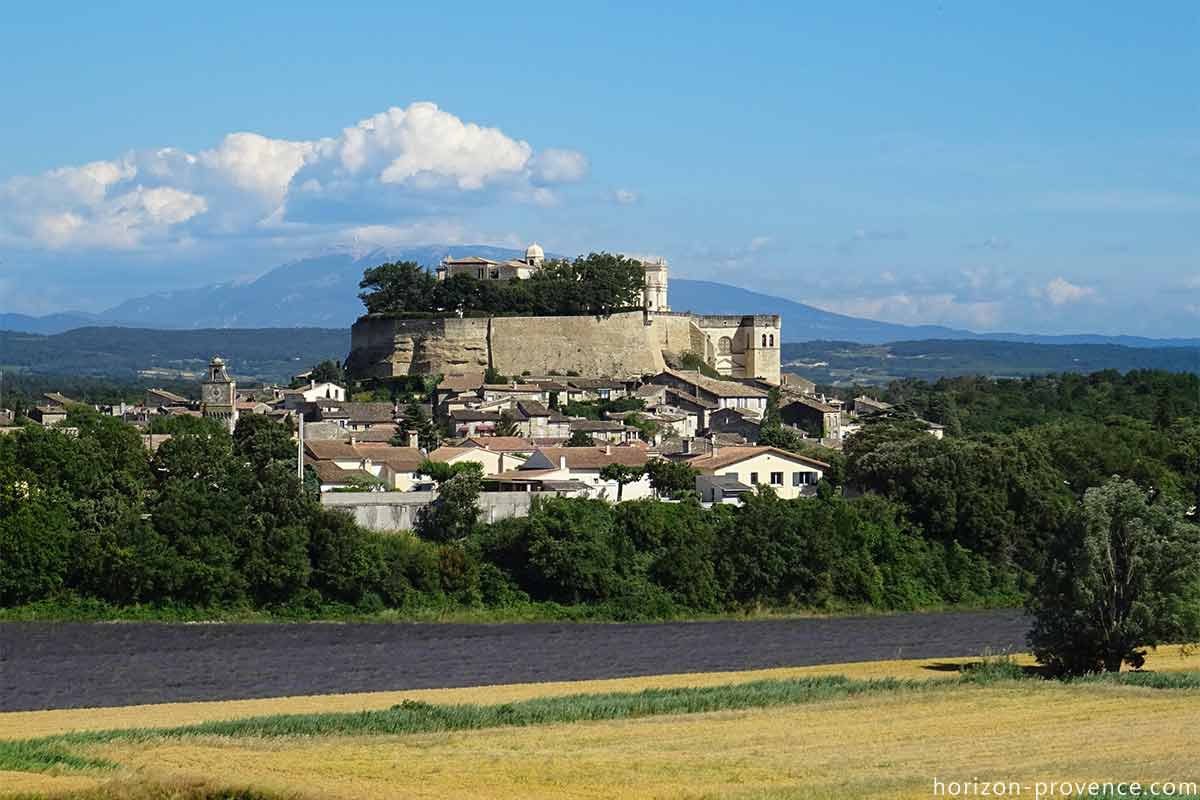
Grignan looks great, built on a steep hill and crowned by a magnificent Renaissance castle. Grignan has retained its medieval appearance. The village houses cluster in tight rows around the hill below the castle. Grignan regularly appears on magazine covers during the summer season: the lavender fields that extend nonchalantly at its feet and its striking appearance are a symbol of the Provencal Drôme.

Traces of Roman occupation have been found in the place, but the history of the town begins in earnest in the Middle Ages, when the family of Adhemar de Monteil, lords of Montelimar, acquired the barony of Grignan, later raised to the status of a county . The ancestor of this illustrious family took part in the crusades and his descendants occupied high positions such as Count Adhemar de Grignan, Governor of Provence under François 1st, and François de Castellane-Adhemar d'Ornano, lieutenant-general of Provence for the King Louis XIV, a very prestigious office in the kingdom of France.
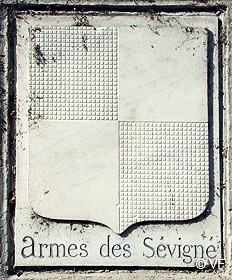
Literature has made Grignan's reputation. Marquise de Sévigné died in the castle. Her correspondence with her daughter married to the Count de Grignan, is a masterpiece of French literature . Since 1996, a Festival of Correspondence is organized annually at the beginning of July, it brings together writers, actors, artists and a discerning audience.
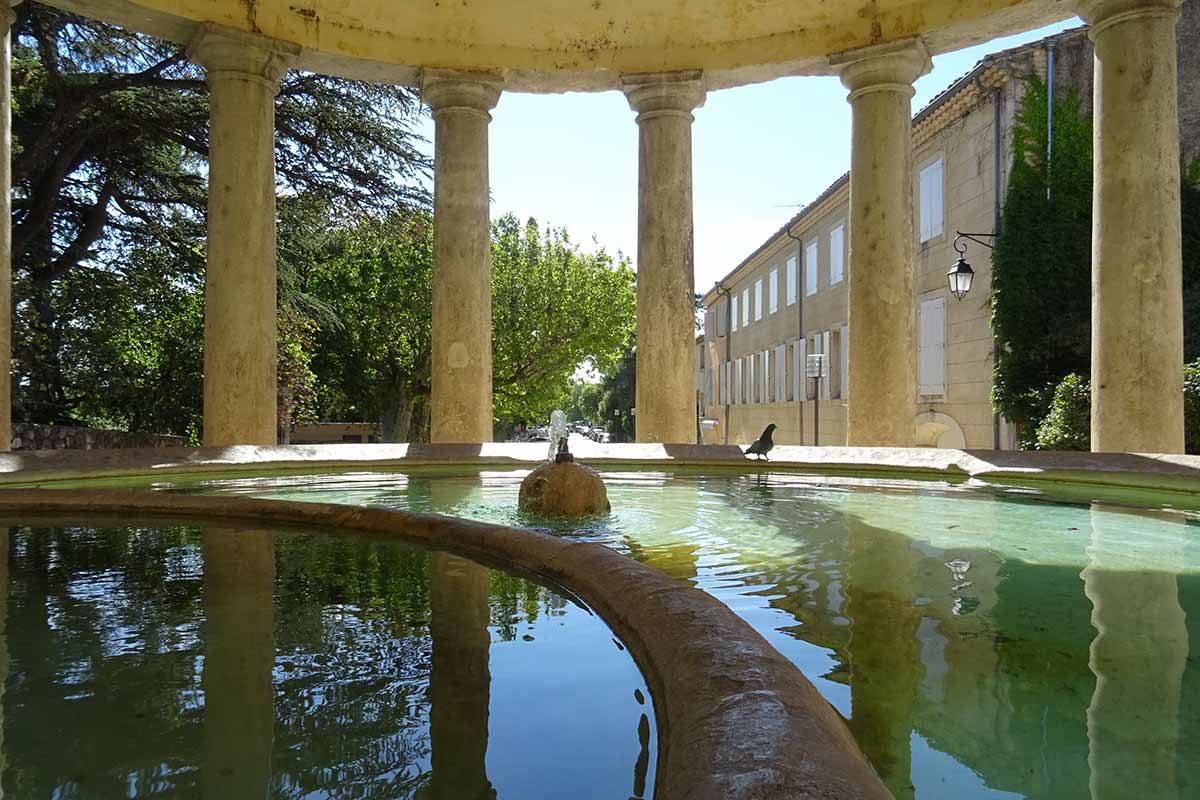
The “mail” is a broad avenue shaded by plane trees at the foot of the village, where the castle’s inhabitants would gather to relax and play pall-mall, a popular game in the 17th century. At the entrance, a washhouse is sheltered by an elegant neoclassical structure with columns reminiscent of a Greek temple. It is actually built in the 19th century.
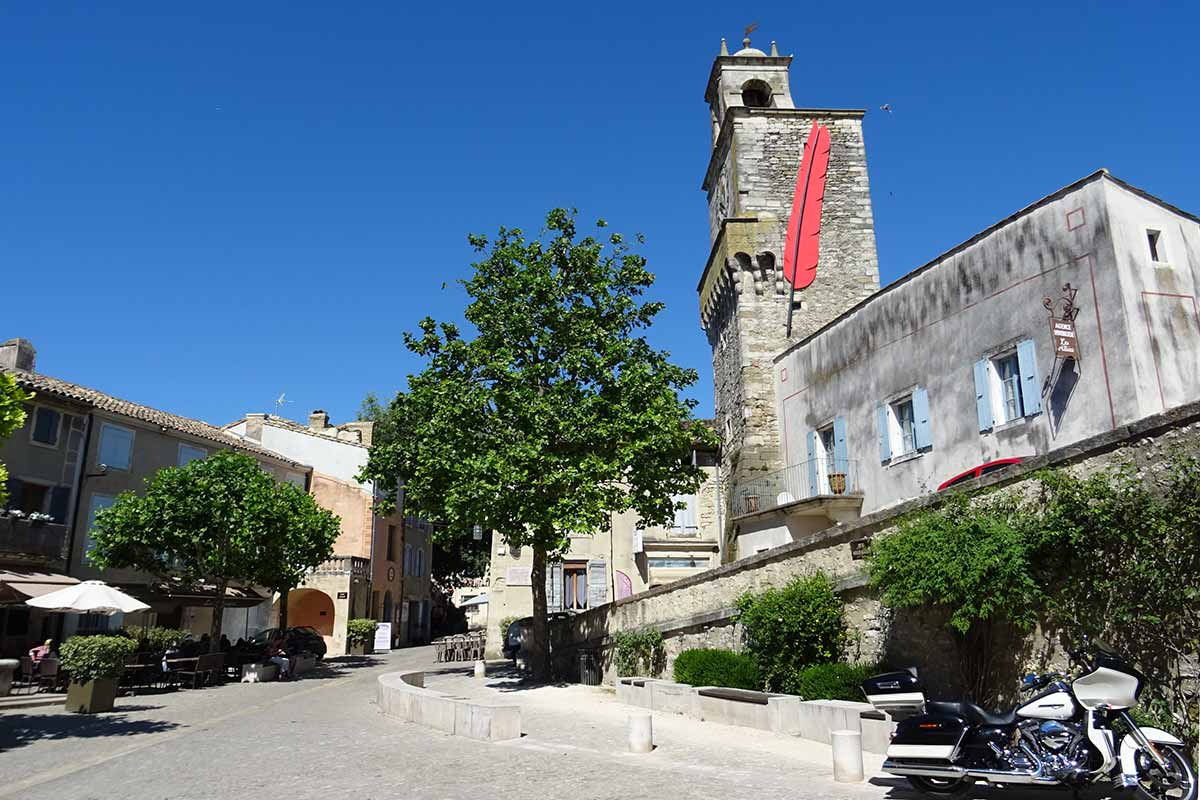
A stroll in the streets of the village is very nice, the village has been skilfully restored, it breathes tranquility and the lifestyle that visitors are eager to find in Provence. The old walls still surround the medieval town, which has a 14th-century gateway topped by a belfry marking the entrance. Some houses date from the late Middle Ages.
The Collegiate or Church of St. Sauveur is located below the terrace of the castle, it keeps the tomb of the family of Adhemar and the Marquise de Sévigné. Its 17th-century organ is remarkable and concerts are held regularly.
The Château de Grignan
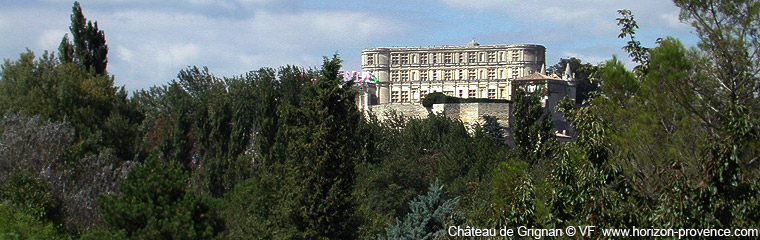
The Château de Grignan is one of the most remarkable castles of Provence. Built in Renaissance style, it stands on a wide platform on top of the isolated hill, so it offers a magnificent panoramic view over the surrounding countryside, very appreciated by the Marquise de Sévigné. We see at the foot of the castle tile roofs of the village houses, the "Garden Sevigne," an original work by a visual artist from Grignan, created for the tercentenary of the death of the Marquise de Sévigné in 1996.
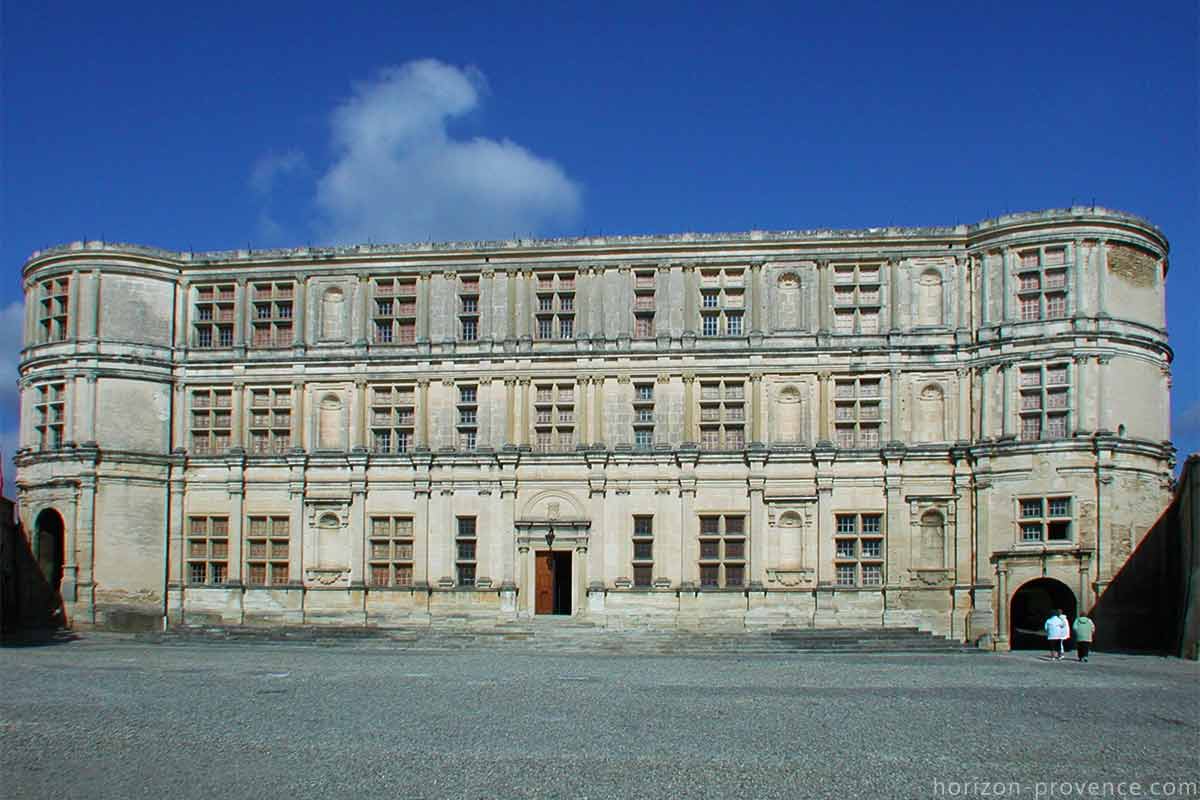
The castle originally dates from the 12th century, when it was an austere feudal fortress, like many others in the region during the Middle Ages. It was built by Adhemar de Monteil, a powerful regional family. The castle was completely overhauled by Louis Adhemar between 1545 and 1548 into a stately home: It gained a new façade pierced by windows, flanked by two corner towers, a large terrace and gardens.
Saint-Sauveur church is located below the terrace of the castle, it contains the tomb of the family of Adhemar and the Marquise de Sévigné. Its 17th-century organ is remarkable and concerts are held regularly.
The Chateau de Grignan, considered a symbol of feudal oppression of the Ancien Régime was badly damaged and vandalised during the Revolution. Marie Fontaine bought the ruins in 1912, she restored and rebuilt the castle following the original plans. The General Council of the Drôme department finally acquired it in 1979. The Fêtes nocturnes are held at the Château de Grignan each summer, with a show performed in the courtyard, recalling the splendor of the era of the Marquise de Sévigné
Photos of Grignan : slideshow
Grignan, village in Provencal Drome
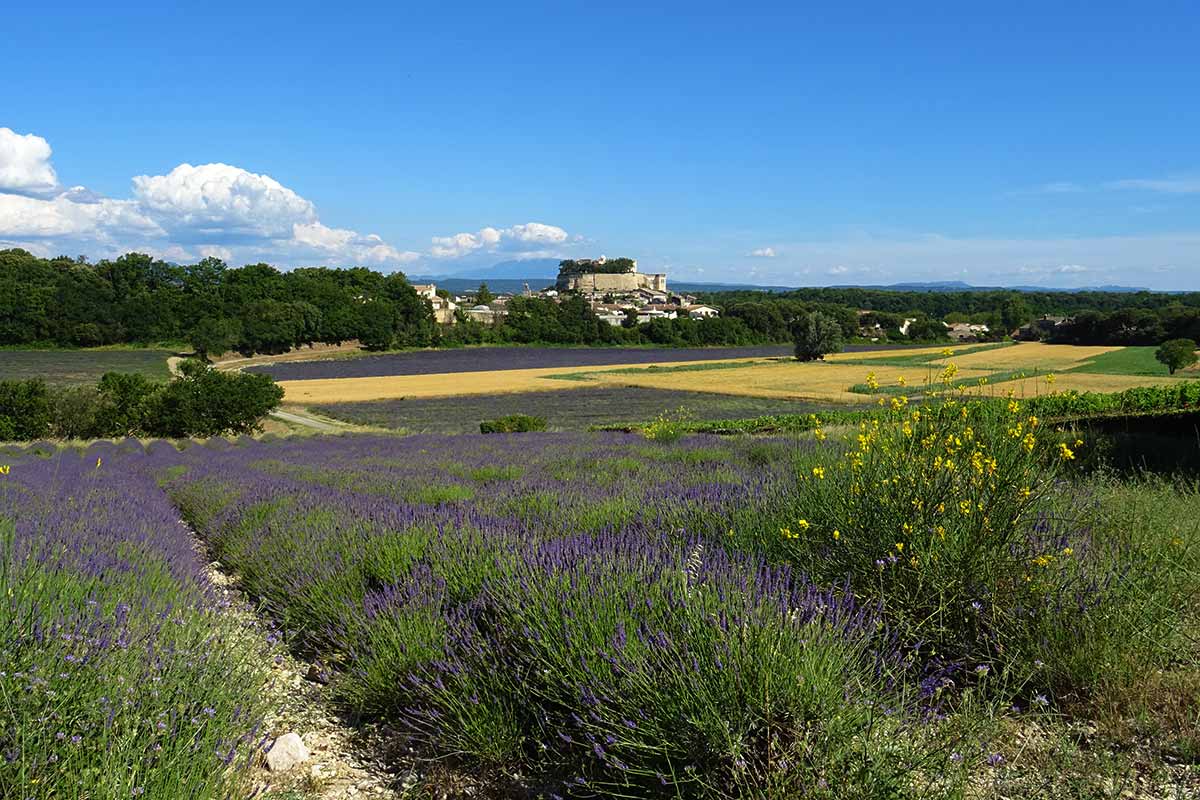
Grignan in Provencal Drome
Grignan, the Château and the church Saint-Sauveur
The washhouse of Grignan
Grignan, village in Provencal Drome
Château de Grignan, Renaissance-style castle
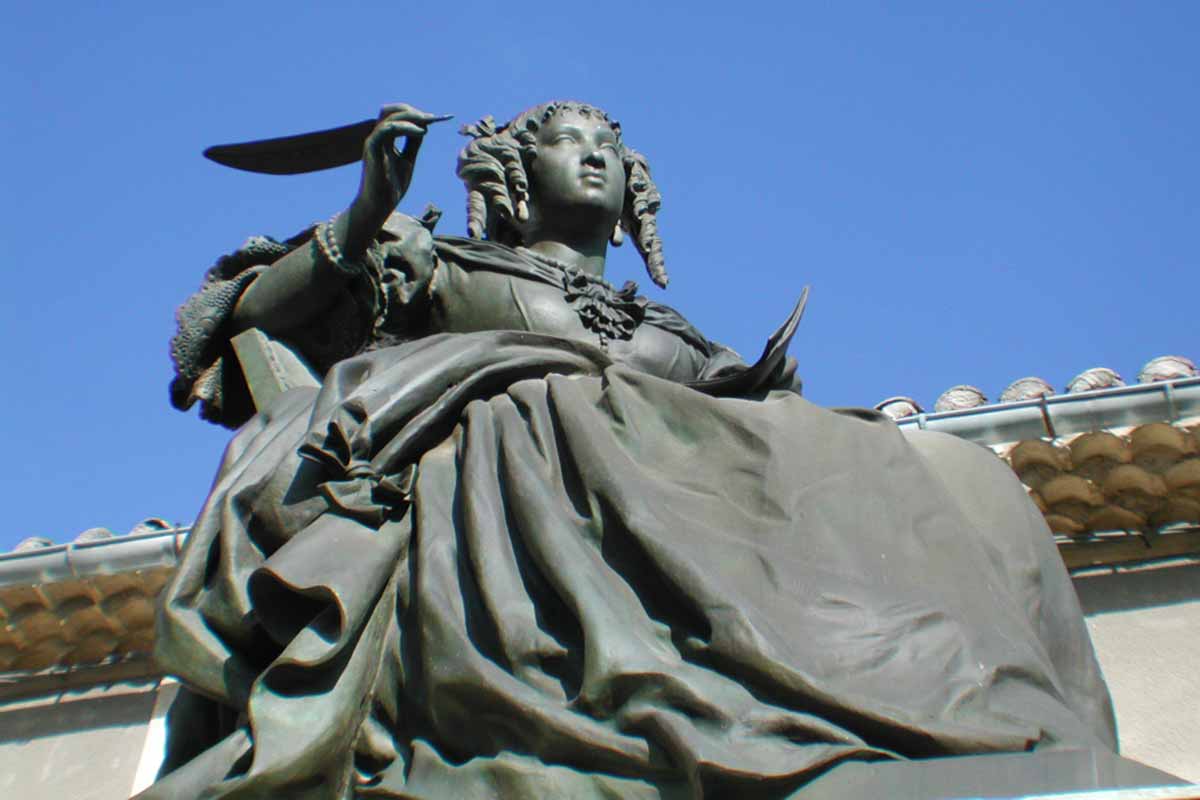
Marquise de Sévigné, place Sévigné in Grignan
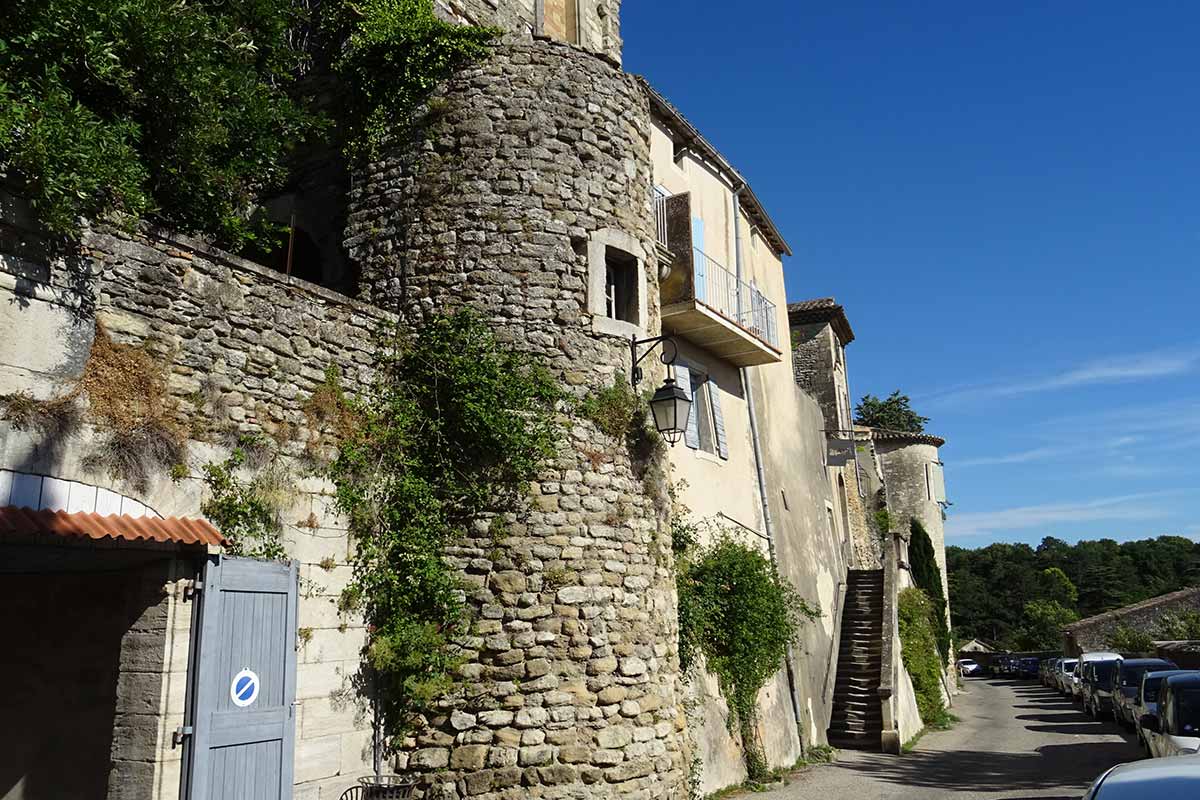
Rampart of the village Grignan
Grignan, place Sévigné and the belfry
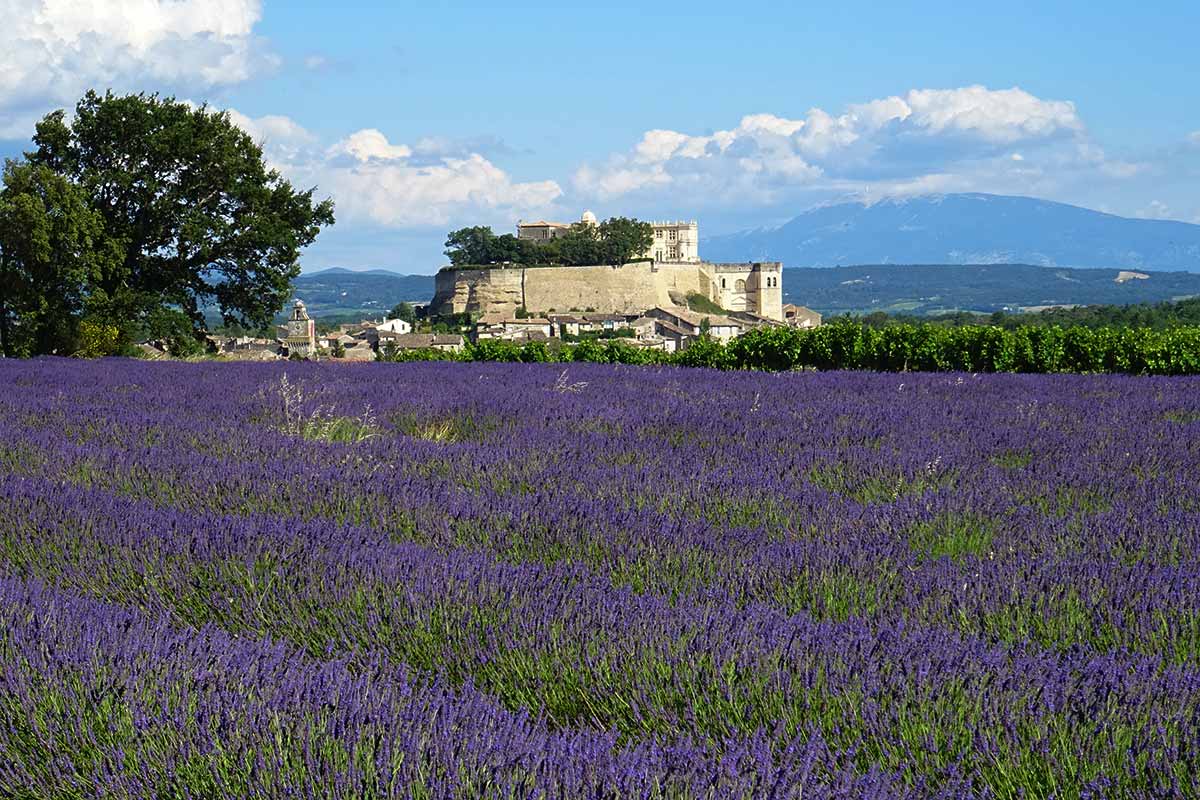
Grignan, village in Provencal Drome
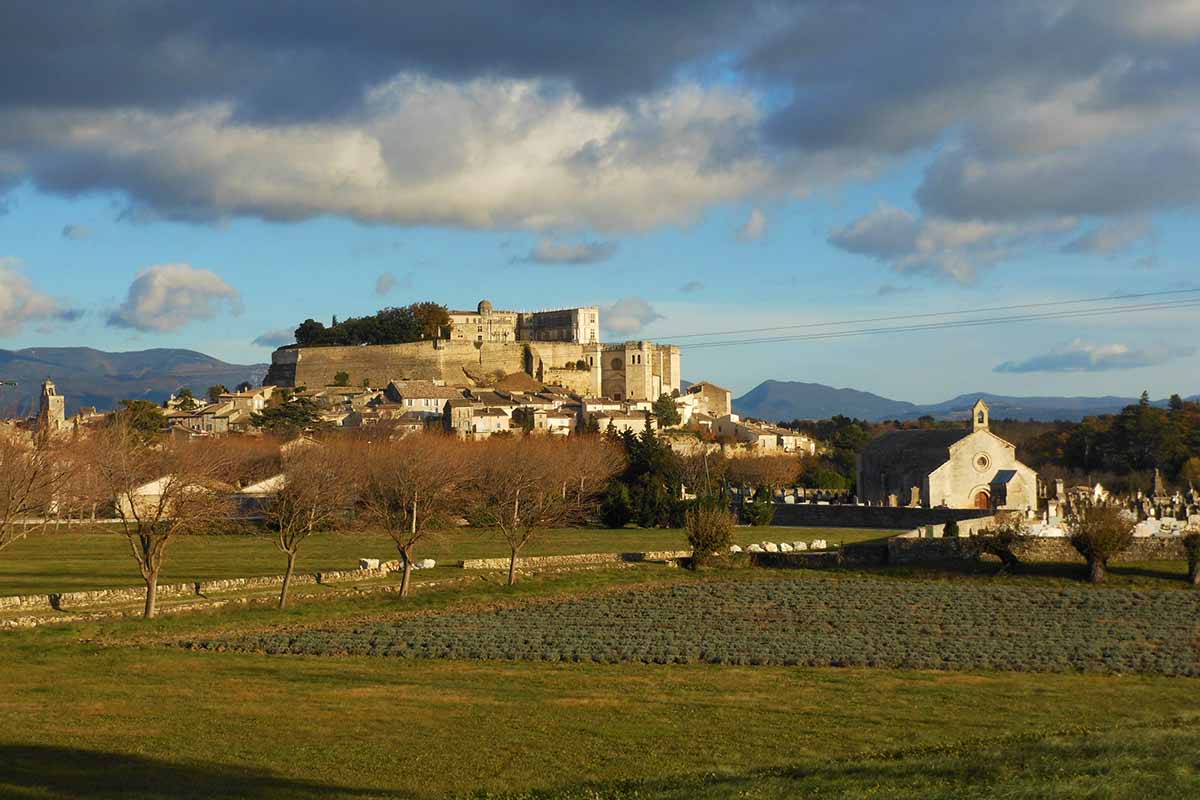
Grignan in winter
Information and accommodation in Grignan and nearby
 selection of b&b
in Grignan and nearby on the portal of the Guest houses in Provence
selection of b&b
in Grignan and nearby on the portal of the Guest houses in Provence
website of the town : ville-grignan.fr
 Sights
and activities :
Sights
and activities :
- Old town
- Castle of Grignan
- Collegiate Church of St. Saviour
- Chapel of St. Vincent
- Botanical village
- Workshop museum of typography
- Miniature Provencal Village
- The Rochecourbière cave
- Agricultural Fair Fiero au païs
- Festival of Correspondence the first week of July
- Night Festivities Grignan Castle in July and August
- Organ concerts at the Collegiate
- Votive Feast last weekend of July
- Weekly market on Tuesday on the mail
Getting to Grignan
GPS coordinates N 44°25'12'' - E 4°54'28''
Location : altitude 200 metres, 1500 inhabitants, 5 miles from Richerenches, 6 miles from Valréas, 14 miles from Nyons, 15 miles from Montélimar, 18 miles from Orange, 45 miles from Avignon
Explore further with my articles in the Getaways section of the Guest Houses in Provence Portal: Four hundred rose bushes in the streets of Grignan.