
Roman Provence
From amphitheatres to aqueducts, a photographic trail
From the pale stone of the Pont du Gard to the tiers of the theatre in Orange, the region’s Roman past can be explored in towns and landscapes alike. I invite you to discover four places through my photographs, with links to the full reports at each stop.
Follow these places in any order, according to your interests. This selection brings together photographs from the Horizon Provence archives; the reports retain the atmosphere of the time they were created.
1. Arles: antiquity at the heart of the city

In Arles, Roman monuments are part of a walk through the streets. The amphitheatre and the Roman theatre belong to the cityscape, among squares, façades and café terraces. They invite us to imagine an earlier city beneath the one we explore today.
From the tiers, the eye follows the curve of the amphitheatre. Walking through the galleries reveals an architecture designed to accommodate crowds of spectators and guide their movements.
2. The Pont du Gard: stone and water

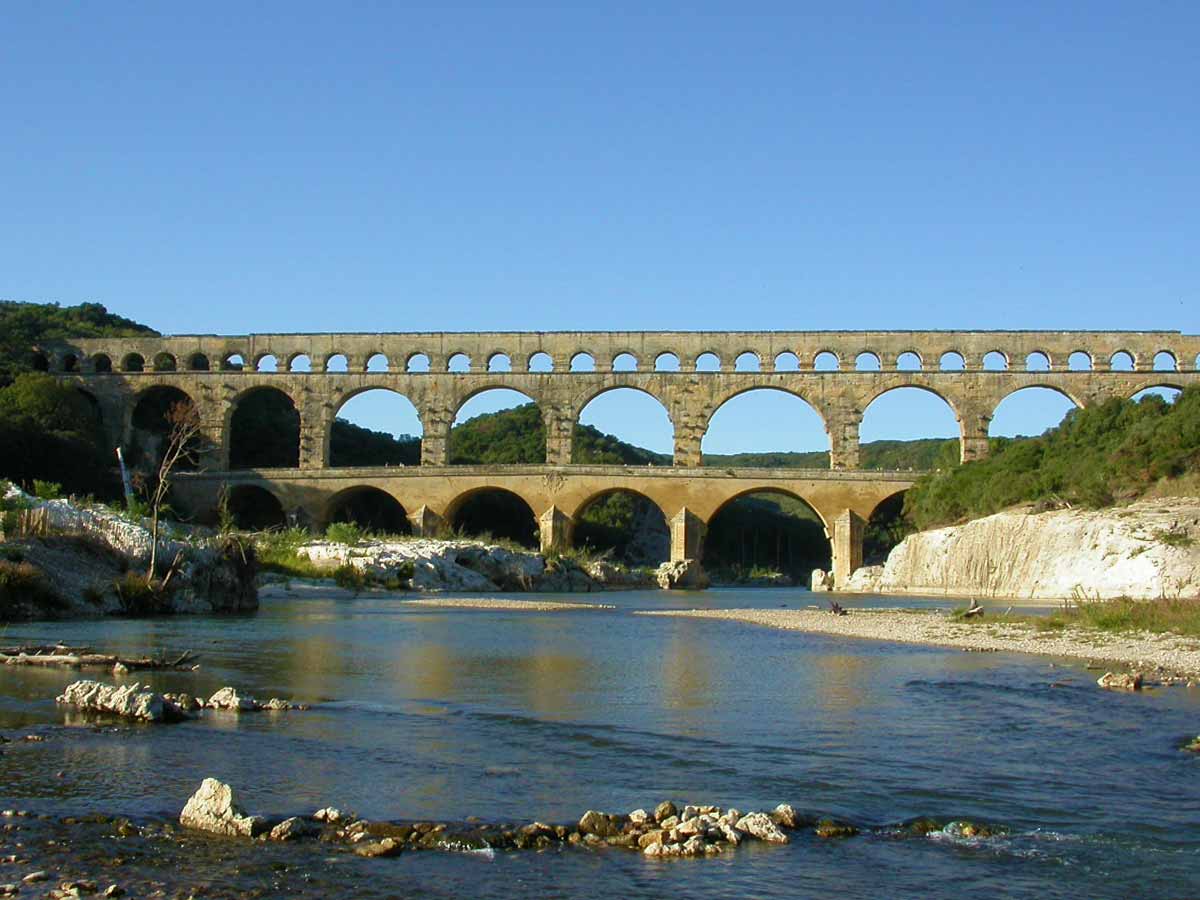
Above the Gardon, the arches of the Pont du Gard form an immediately recognisable landscape. The monument also tells a less visible story: that of water carried from the area around Uzès to Nîmes, across hills and valleys.
The bridge was just one part of this aqueduct. Seen from the riverbank, it conveys both the ambition of Roman engineering and its place in the Mediterranean landscape.
3. Orange: facing the theatre’s stage wall
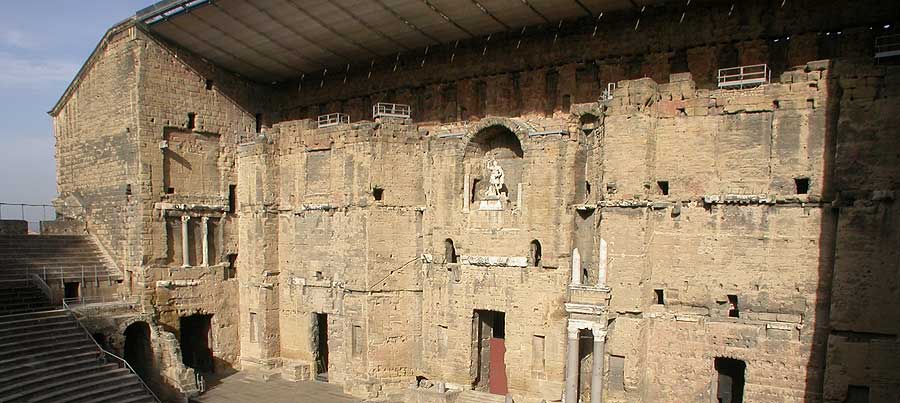
In Orange, discovering the theatre begins with its immense stage wall. From the tiers, the space comes together: audience, stage and architecture form a setting built around performance.
The photographic report offers different viewpoints, a closer look at the theatre’s details and a continuation of the walk through a town where antiquity remains very much in view.
4. Vaison-la-Romaine: traces of everyday life

After the great monuments, Vaison-la-Romaine offers another approach to antiquity. In the districts of Puymin and La Villasse, the remains of houses and streets invite us to consider the inhabitants, their daily routines and their surroundings.
The theatre and Roman bridge add to this exploration. The report also continues towards other aspects of Vaison, between the river, the town and the medieval heights.
Further information from the sites: Arles · Pont du Gard · Orange · Vaison-la-Romaine.