


Elected in 1316 after a two-year vacancy of the papal see, Jacques Duèze took the name John XXII. His long pontificate strengthened the papacy’s establishment in Avignon and was marked by political and religious conflicts.
Jacques Duèze, elected pope in 1316
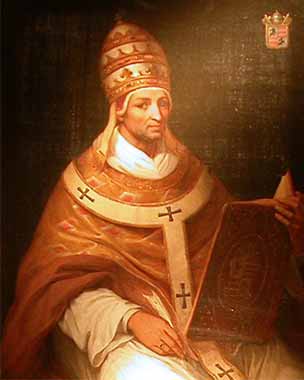
Portrait of John XXII by Henri Serrur — Palais des Papes, AvignonBorn in Cahors, Jacques Duèze was already about 70 when he was elected after a long conclave. He governed the Church until 1334. His pontificate helped establish the papal court more firmly in Avignon.
Reforms and religious disputes
John XXII strengthened papal administration and finances. His authority also met opposition, notably in debates about evangelical poverty defended by some Franciscans. Religious arguments were closely linked to the political struggles of the period.
The conflict with Louis of Bavaria
The pope opposed and excommunicated Emperor Louis IV of Bavaria. In 1328, the antipope Nicholas V was appointed in Rome with the emperor’s support. He submitted to John XXII in 1330 and died in Avignon in 1333.
The controversy over the beatific vision
Towards the end of his pontificate, John XXII provoked a controversy over when the souls of the righteous could contemplate God. He withdrew his position before his death on 4 December 1334. This was a specific theological dispute. His successor, Benedict XII, defined the doctrine in 1336.
Explore the setting of this pontificate through the Palais des Papes and our account of Provence during the Avignon papacy.