
![Avignon [fr]](/images/version_francais.gif)
![Avignon [en]](/images/version_english.gif)
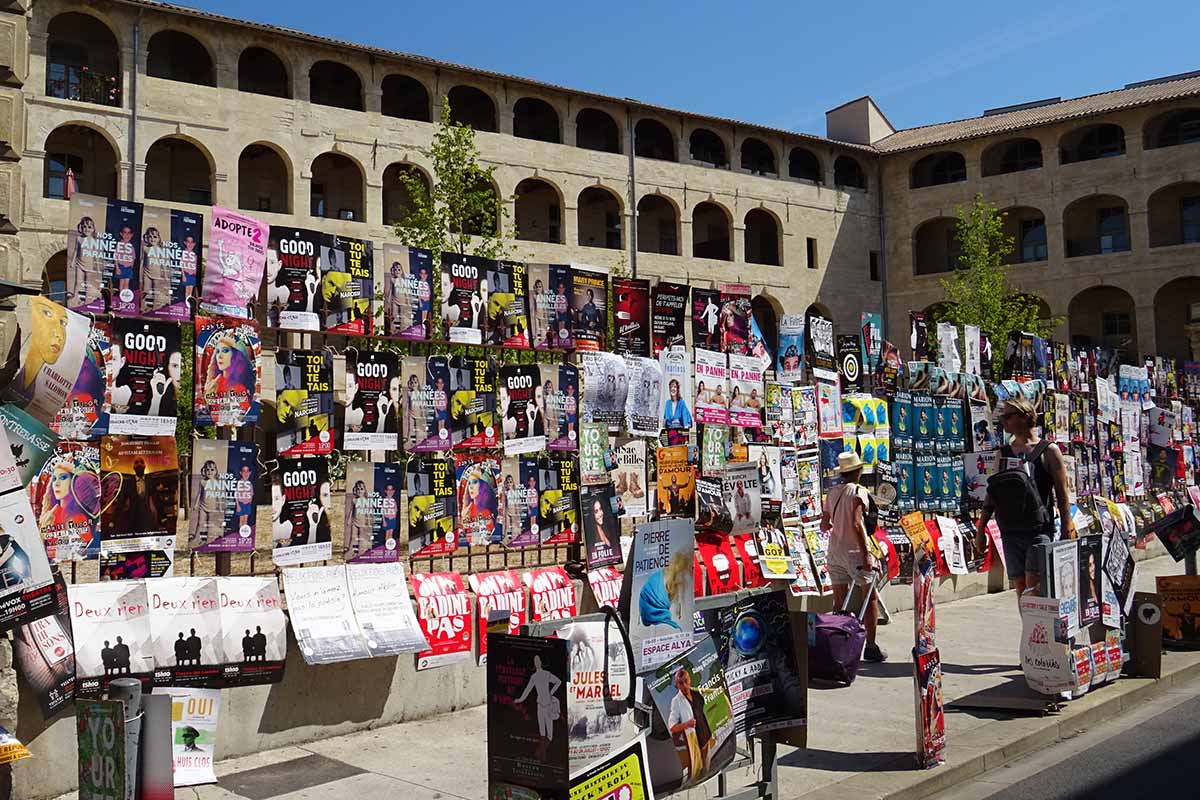
Festival d'Avignon
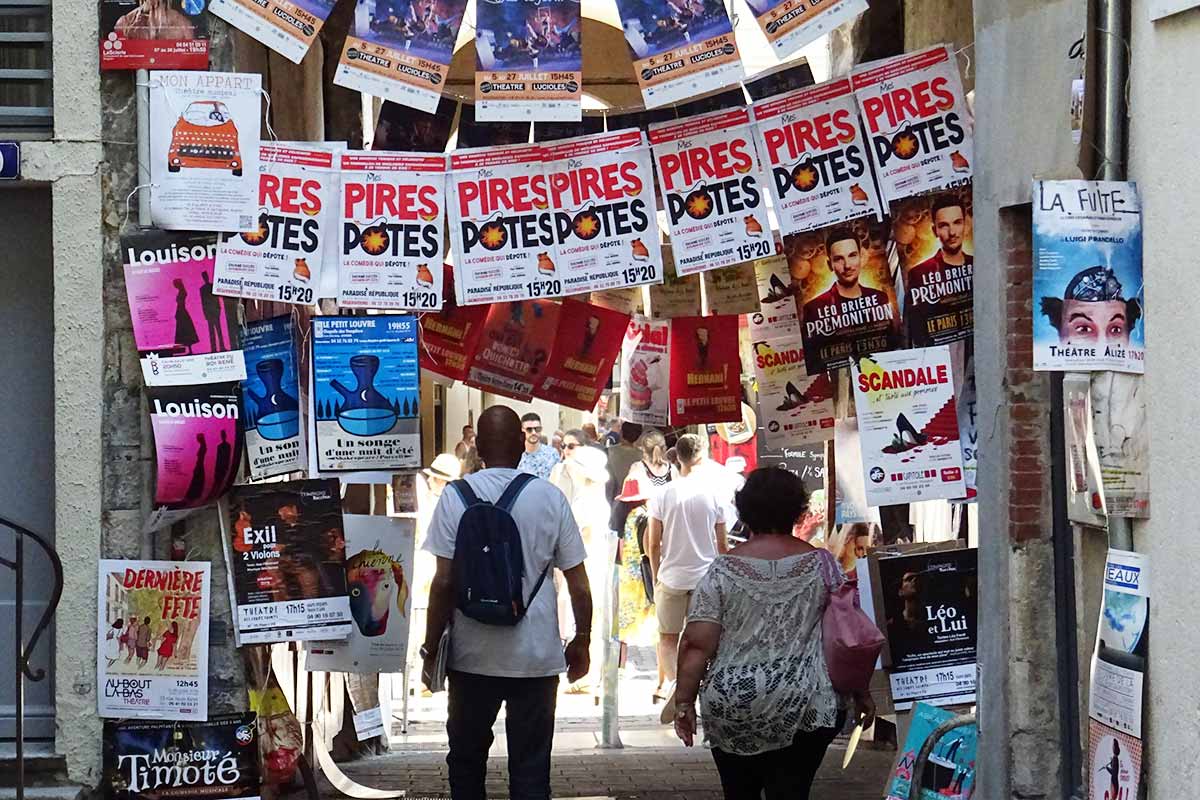
Festival d'Avignon
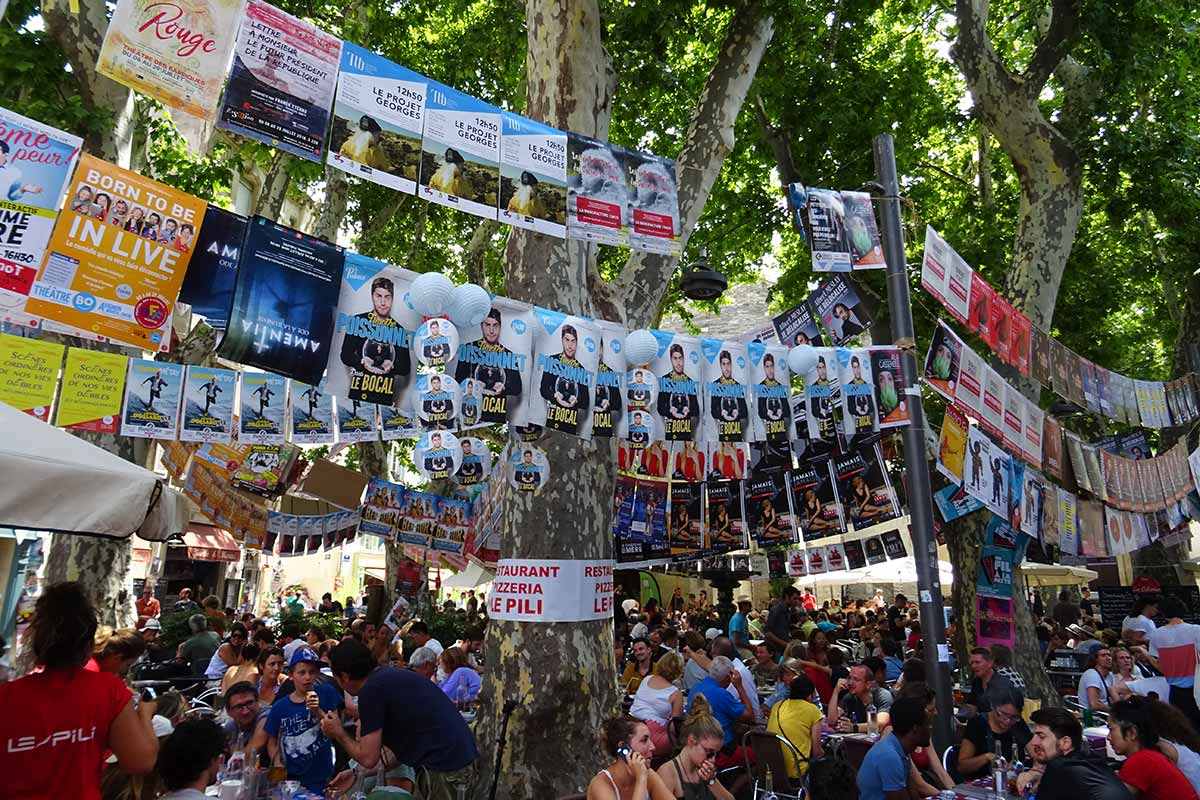
Place des Corps Saints during the Festival d'Avignon
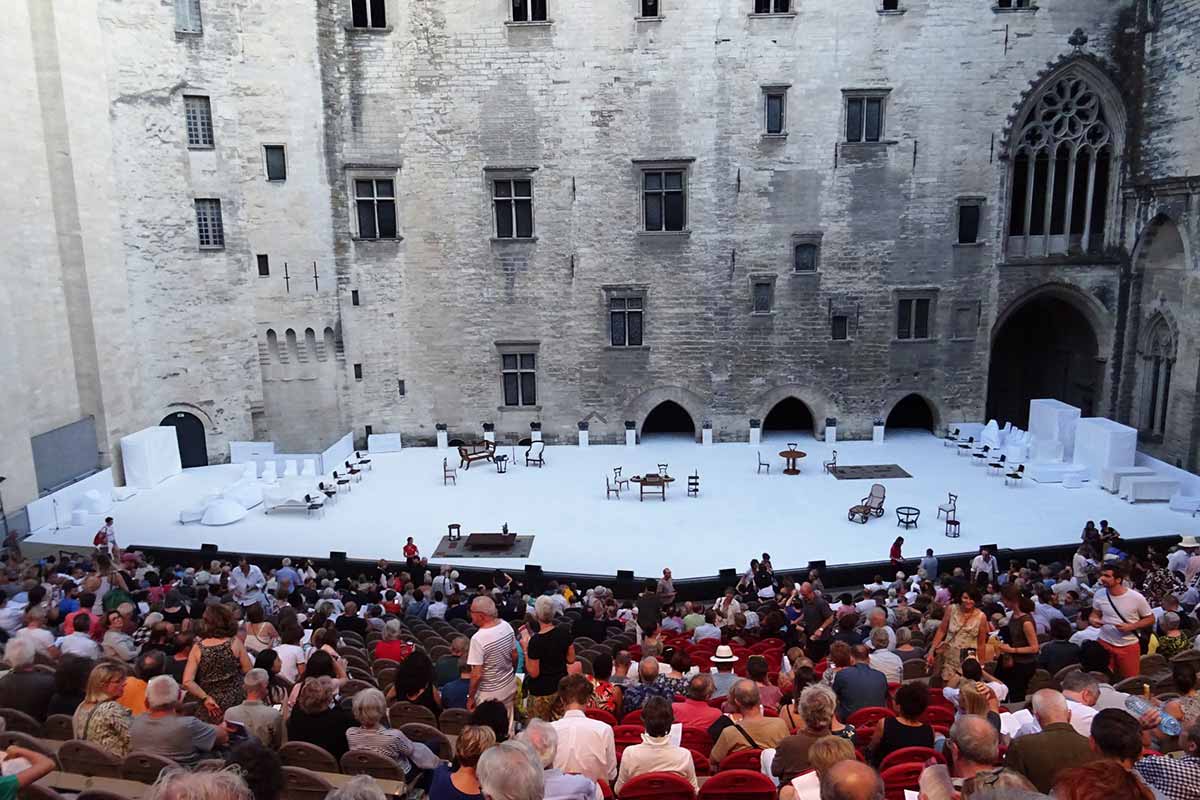
Show in the Cour d'Honneur of the Palace of the Popes during the Festival d'Avignon
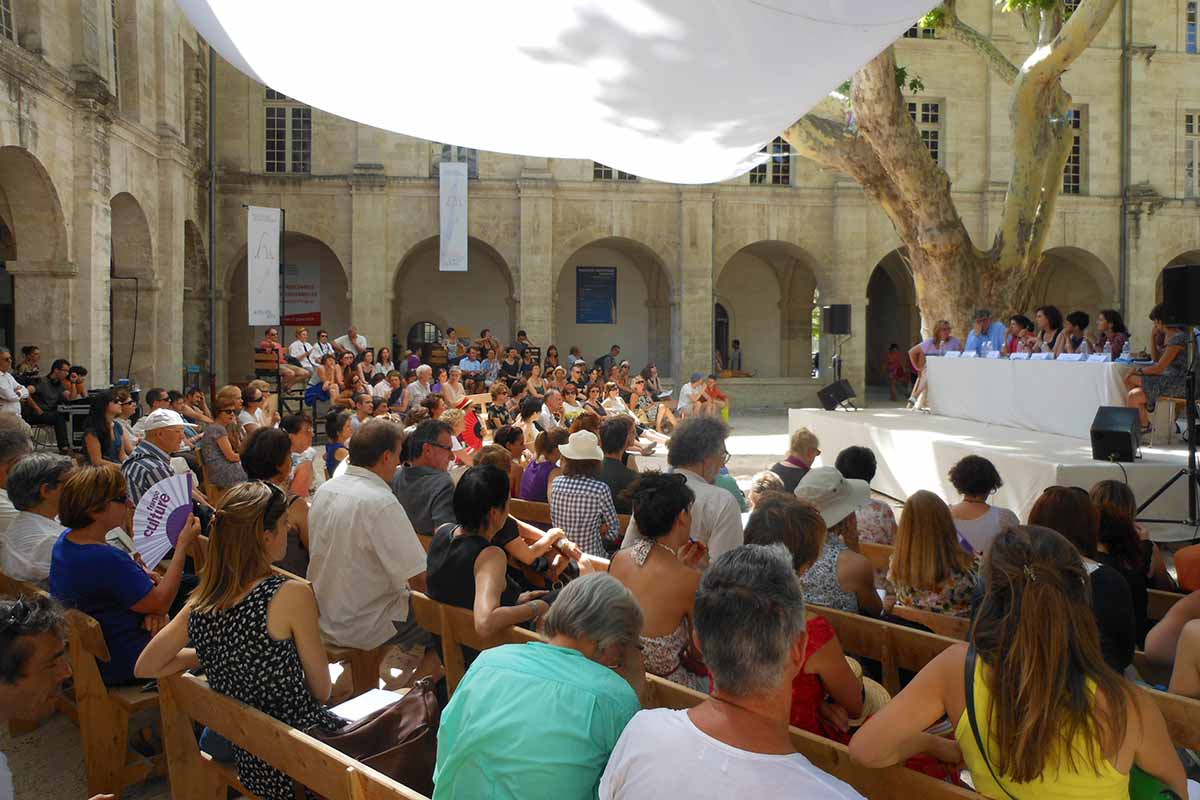
The Cloître Saint-Louis during the Festival d'Avignon
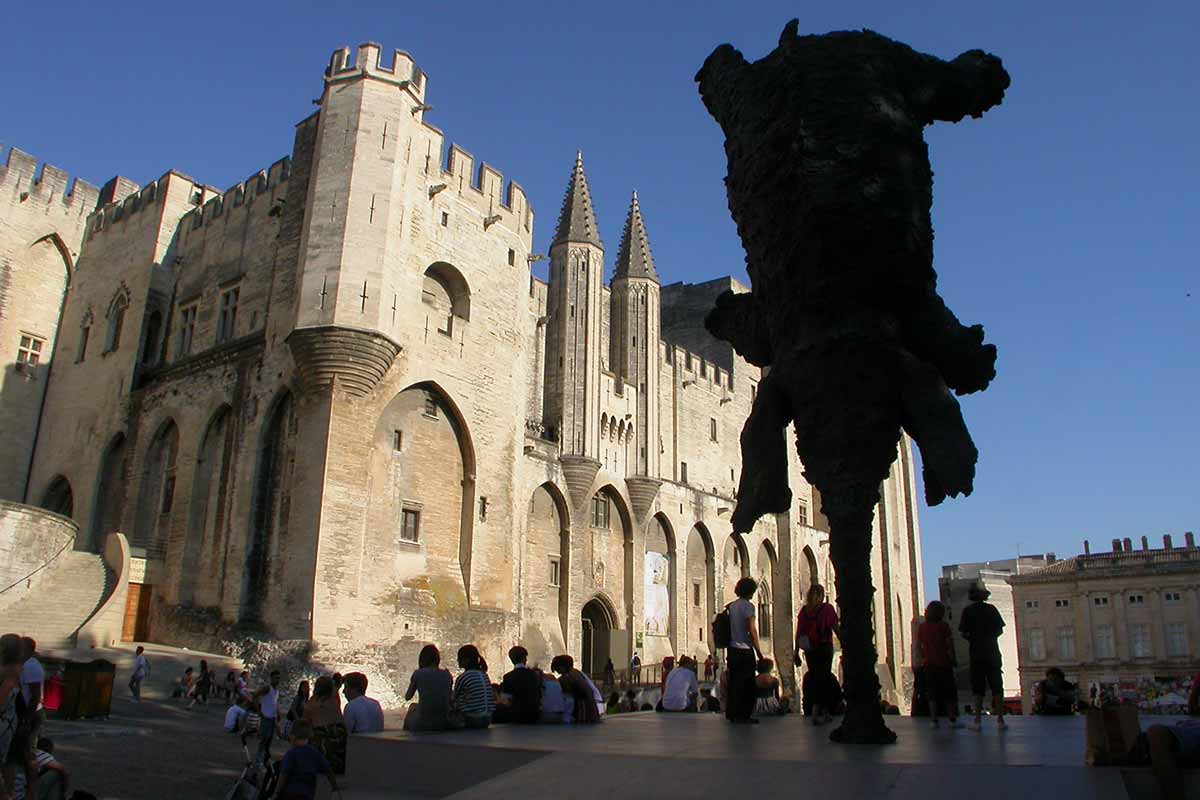
Sculpture displayed on the Place du Palais des Papes in 2010 during the Festival d'Avignon
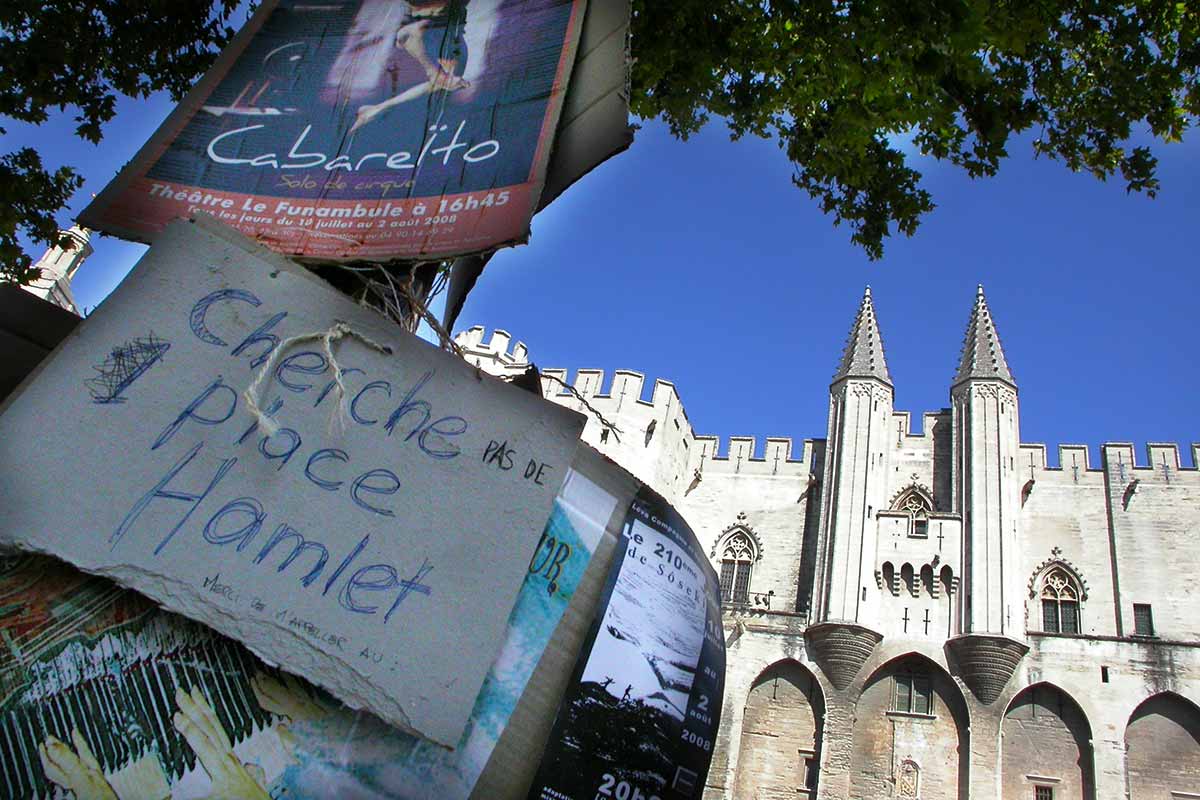
The Festival d'Avignon
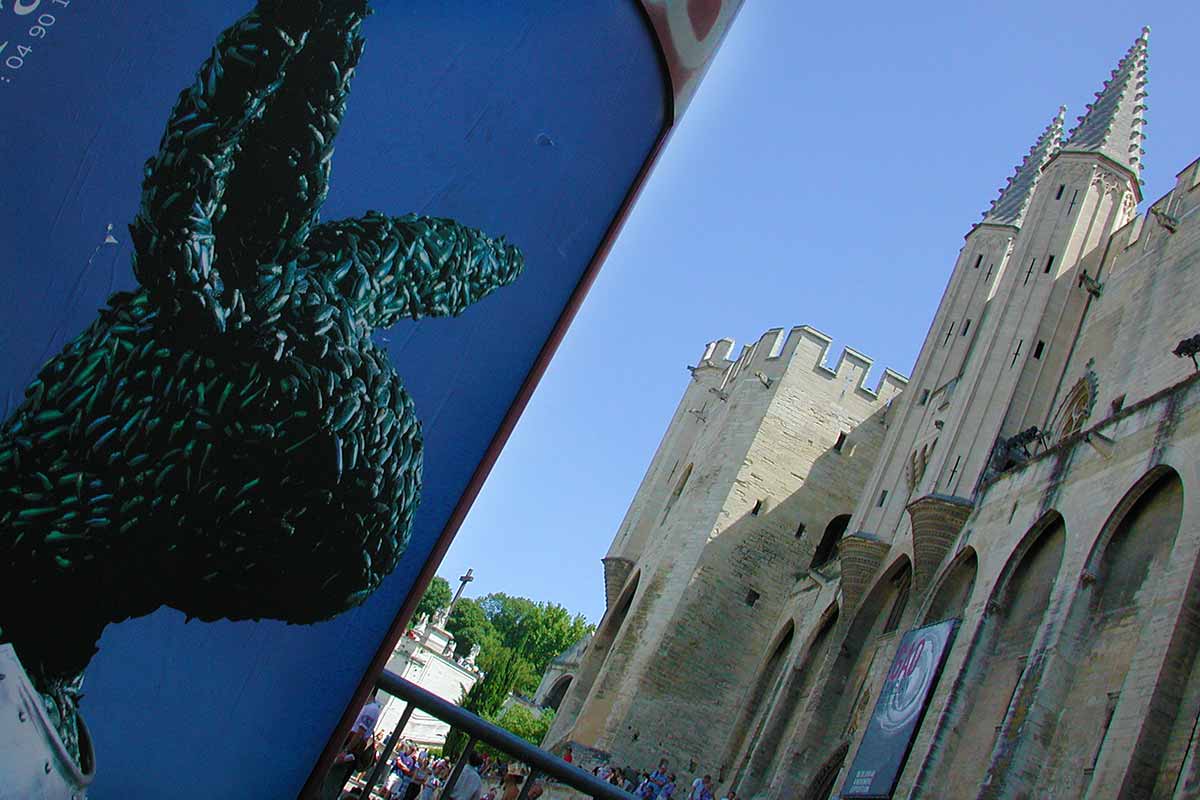
The Festival d'Avignon, Jan Fabre poster in 2001.
The Avignon Festival is in France the event of the year that all people interested in theatre and the performing arts wait for.
The Avignon Festival was created by Jean Vilar who came to the Cour d'Honneur of the Pope's Palace for the first time in 1947. He made the Avignon Festival the festival par excellence, where demanding theatre meets a wide audience. Sixty years after its debut, its success is still at the top.
Actors made the legend of the Avignon Festival, Jean Vilar of course, but also actors in his troupe : Gérard Philipe, Jeanne Moreau, Maria Casarès and many others. The Festival d'Avignon is also a mythical stage for theatre in France : the Cour d'Honneur of the Pope's Palace.
The Avignon Festival Off is the anarchical and luxuriant complement of the official Avignon Festival. It fills the old papal city with a frantic enthusiasm : theatre stages appear everywhere in the centre of the city. Shows are in the street, on improvised stages located in improbable places. The Avignon Festival Off attracts a large audience, curious and ready for the most diverse experiences.
Many words are written on the Avignon Festival every year but it is above all a living experience.
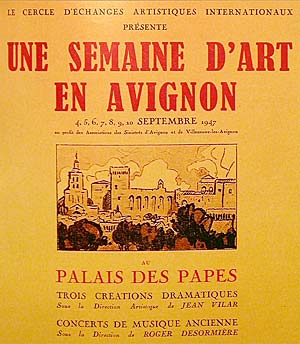
Une semaine d'art en Avignon - 1947 - Maison Jean Vilar
The poet René Char and Christian Zervos inaugurate in September 1947 an "Art week in Avignon". They organize a contemporary art exhibition in the pope's Palace and they invite the director Jean Vilar to perform in the Cour d'Honneur of the palace. Initially hesitant, Jean Vilar presents three plays of which "Richard II" of Shakespeare. The majestic and austere setting transcends dramatic theatre. The enthusiastic audience wanted more and has remained faithful to the Avignon Festival since 1947.
The Festival is a growing success during the 50's. The performances of "Le Cid" (Corneille), Richard II (Shakespeare), " The Prince of Homburg" (Heinrich von Kleist) in the Cour d'Honneur built the Avignon Festival’s legend and earned it a place in the history of French theatre.
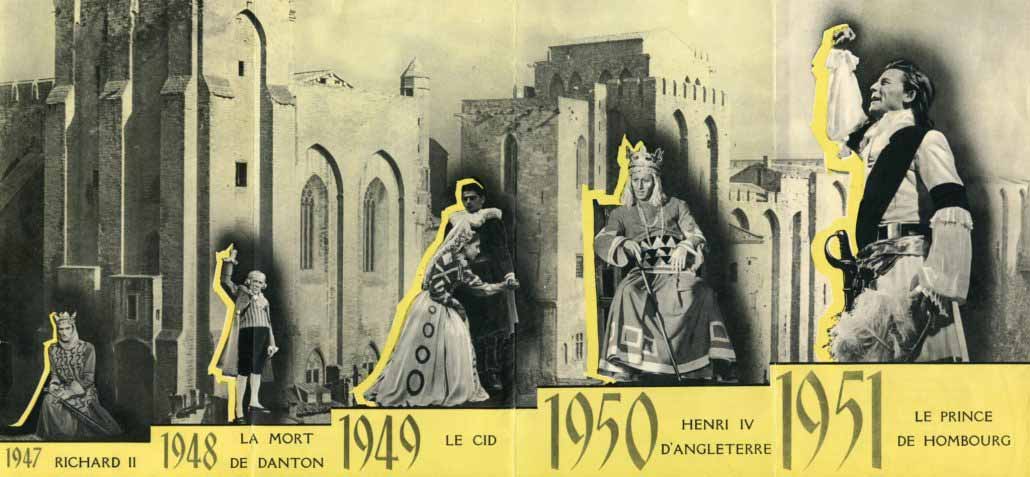
Jean Vilar's Festival, the beginning of the Festival d'Avignon
Jean Vilar has a militant approach : he bets on desire of a young and popular public for quality theatre confined until now in traditional stages. He makes a demanding and popular theatre.
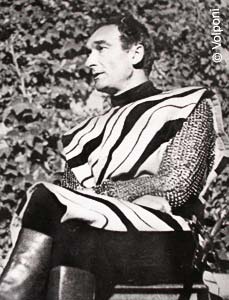
Jean Vilar © photo Volponi
Jean Vilar dedicates himself completely to the running of the Avignon Festival from 1964. He invites directors of theatre, he opens the Festival to Dance and Cinema, presented on new stages in the city. Jean Vilar wants to make the Avignon Festival a place for cultural exchange and reflection, connected to changes in society.
Nevertheless in 1968, just after the student revolts of May, Jean Vilar faces an impervious and radical youth.
Jean Vilar passes away in 1971 just before the opening of the 25th Avignon Festival. Paul Puaux, his assistant takes over. He follows the direction started by Jean Vilar, he hosts in the Festival the diversity of performing arts : cinema, readings, musicals, children’s theatre, meetings. Paul Puaux resigns in 1979 to manage the "Maison Jean Vilar" which keeps the Festival memory. The Festival needs a second wind.
The Festival d’Avignon in the 1980s and 2000s
Bernard Faivre d'Arcier was appointed artistic director from 1980 to 1984, and from 1993 to 2003, interrupted by Alain Crombecque between 1985 and 1992. During this time, the Festival modernizes and institutionalizes. The faithful public always comes in numbers. The Avignon Festival is a window on theatrical creation in France and in Europe. The task of the artistic director is to reconcile public accessibility with artistic quality and open a large place to contemporary directors and creators.
Mahabarata au Festival d'Avignon 1985 © G. Méran
In 2003, the Festival was canceled at the last moment, for the first time since 1947, because of a strike. The following years reveal that the public is still there. More than the Avignon Festival, the economic model of theatre and performing arts is in crisis and during the Festival the tensions reach their peak. The Festival focuses the tensions of our society.
In 2004, Vincent Baudriller and Hortense Archambault took over as directors of the Festival. They associate each year an artist to the choice of shows. It was the German theatre director Thomas Ostermaeier in 2004, the controversial Flemish artist Jan Fabre in 2005, the dance choreographer Josef Nadj in 2006, and Frédéric Fisbach, a French theatre director in 2007.
In 2007, it was still early to draw lessons from the experience, we can however say that the Festival is not declining. Certainly the enthusiasm of the golden age , the idealism of the 60's and 70's faded. But the Festival is still a sensitive witness of the evolution of society, as Jean Vilar dreamed.
Festival Off
It is not easy to define the Festival Off in Avignon : feast, fair, supermarket of theatre, the Festival Off is all of that and still much more. During the three weeks of the 'official' Avignon Festival, theatres and stages appear spontaneously in the centre of the city. A huge number of shows are proposed to the simple spectator.
The abundance of shows leads to a Darwinian struggle for recognition : posters occupy all available space, thousands of leaflets are handed out, troupes parade in the streets to attract public, keeping the streets lively in the centre of the city.
To play in Avignon, no selection is made, from the amateur theatre to the most established artists, everyone comes to Avignon to find recognition from the public but also contracts with professional programmers coming from all over France to find shows.
André Benedetto, then director of a permanent theatre in Avignon, the "Theatre des Carmes" was the pioneer of the Festival Off : not invited by Jean Vilar, he presents independantly his show during the Festival in 1966. In 1968, the banning of an independent piece by authorities starts the unrest. In 1971, this festival "bis" offers 38 shows in 12 stages, it is named Festival "Off" in opposition to the official Festival often called Festival "In". In 2007, the Festival Off offers more than 970 shows.
The Avignon Festival today cannot be conceived without the Festival Off. Far from being scared by the plethora and diversity of shows, public comes in numbers. Everyone has their own way of finding a path through the jungle of shows : word of mouth, reading reviews, intuition, ...
The Festival Off is a cultural experience renewed every year, always validated by the public. Its success is a sign of the vitality of the performing arts.
Windows opened on the Avignon Festival
Legendary characters stealthily occupy the city of the Popes. During your stroll in the historic city, raise your eyes : following a street, behind a window you'll catch sight of the Prince of Homburg, Scapin, Macbeth, Marianne, Lorenzaccio, Harpagon, Antigone, Hamlet, and many others ...
... You'll recognize the features of the great actors who embody them and where their voices still resound : Gérard Philipe, Jean Vilar, Jeanne Moreau, Daniel Auteuil, Maria Casarès, Daniel Sorano and many others like the choreographer Maurice Béjart, the mime Marceau or Bartabas and his equestrian theatre.
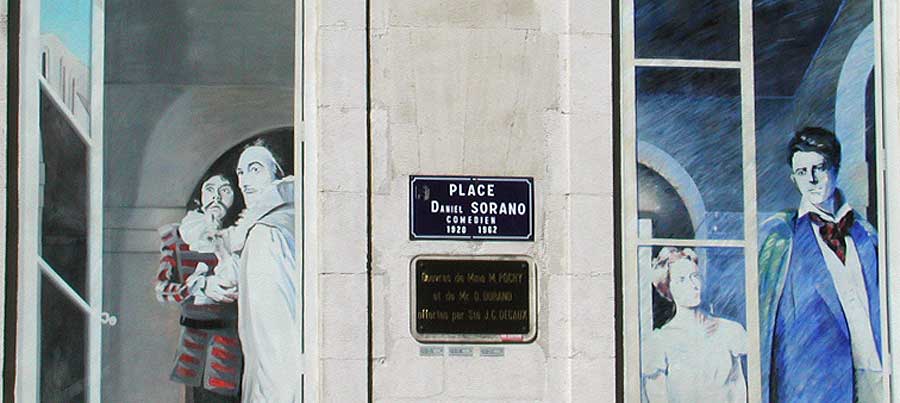
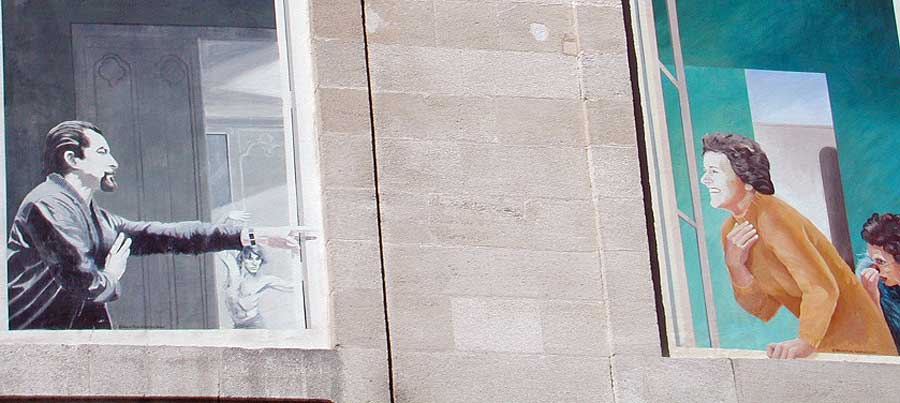
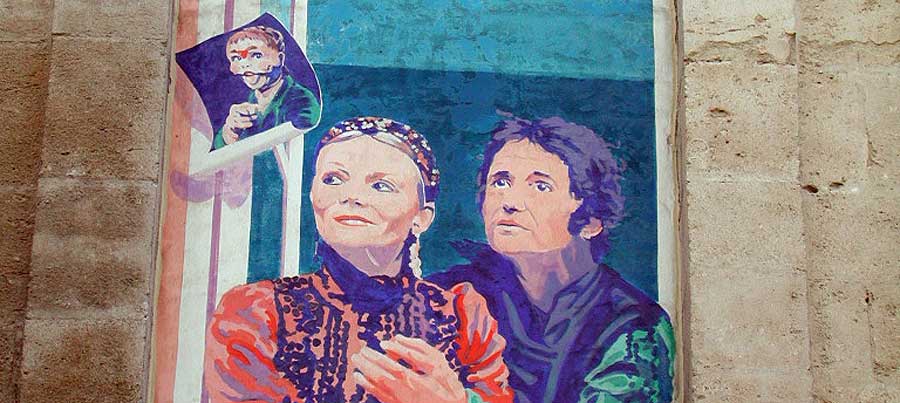
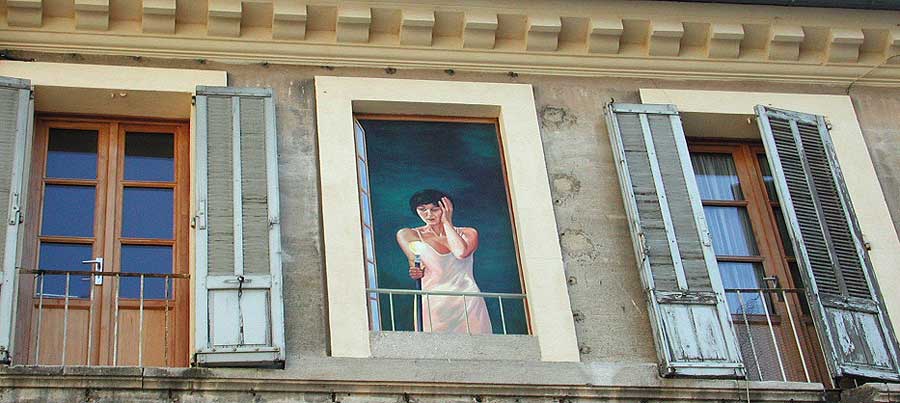
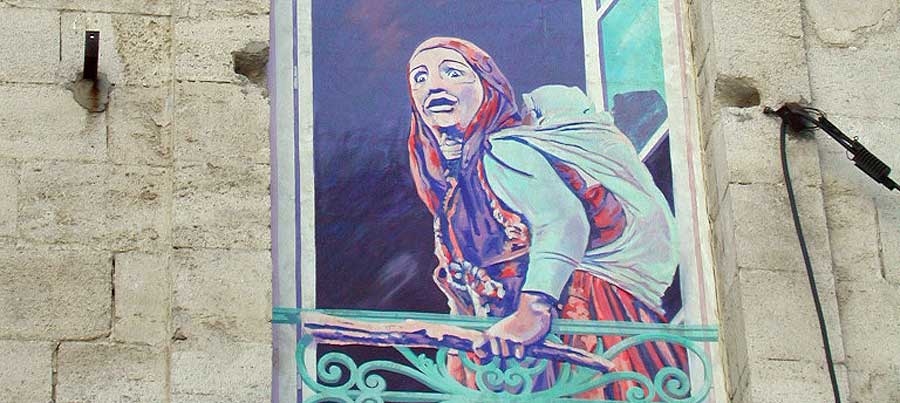
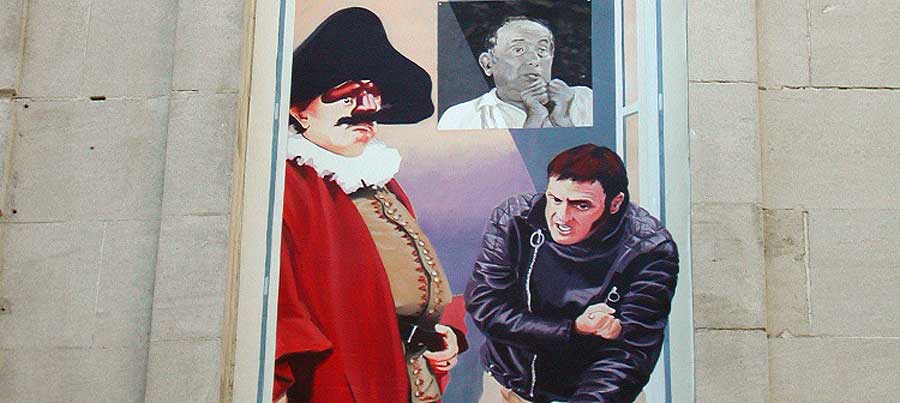
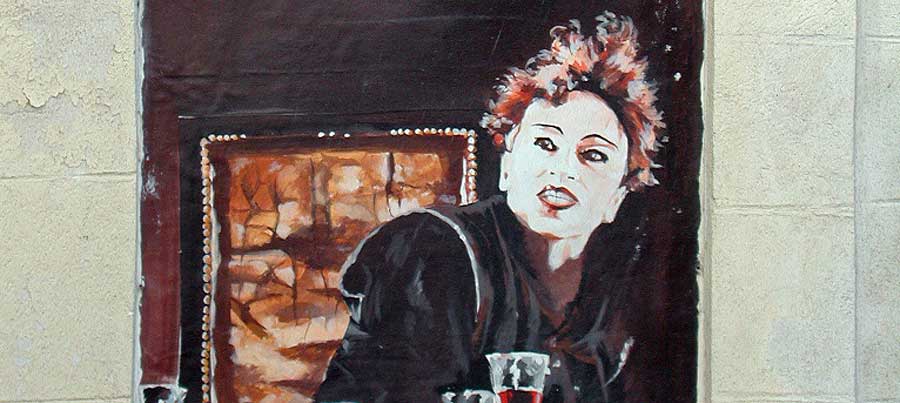
The painted windows are made by M. Pochy and D. Durand
Festival d'Avignon
Official website of Avignon Festival: festival-avignon.com
Cloître Saint-Louis - 20, rue du portail Boquier - 84 000 Avignon
Tel : +33 (0)4 90 27 66 50
Avignon Festival OFF
Official website of Festival Off Avignon : festivaloffavignon.com
Tel : +33 (0)4 90 85 13 08
 Explore further with my articles in the Getaways section of the Guest Houses in Provence Portal: In July, theatre takes over Avignon.