
![Côtes-du-Rhône [fr]](/images/version_francais.gif)
![Côtes-du-Rhône [en]](/images/version_english.gif)
Orange "City of the Princes" in Provence
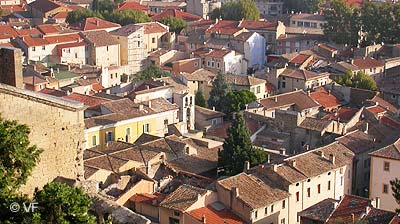 Gateway to Provence for travellers coming from the north of France via the Rhône
valley, Orange is at the crossroads of civilizations
and culture.
Gateway to Provence for travellers coming from the north of France via the Rhône
valley, Orange is at the crossroads of civilizations
and culture.
Since ancient times, history has left many traces here in Orange, with prestigious visible monuments but also the memory of tragic events.
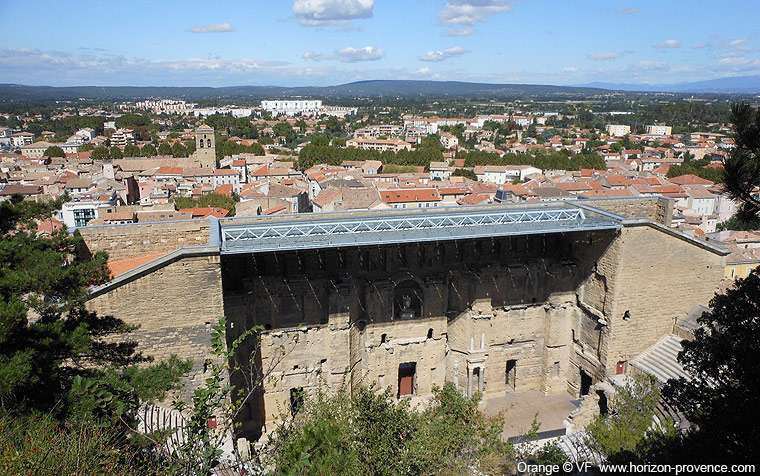
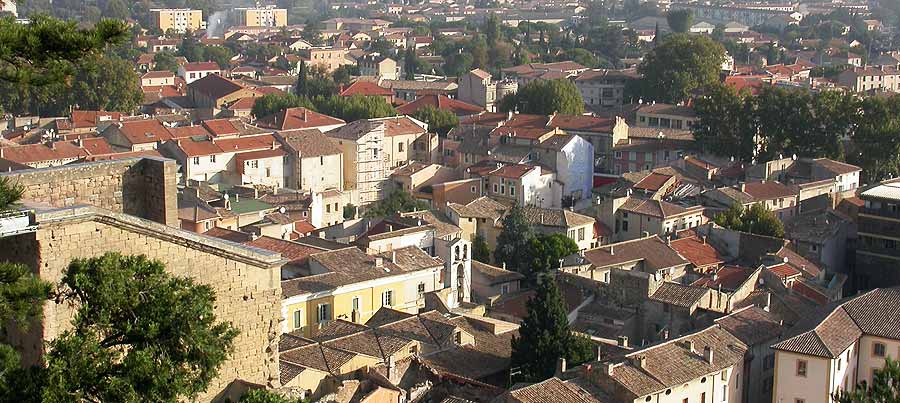
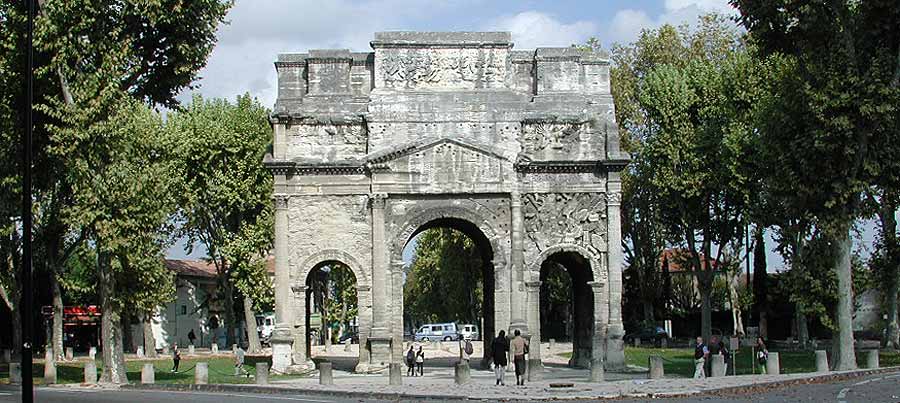
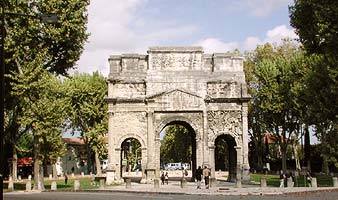
Lying at the foot of the Saint Eutrope hill, Orange the Provençal city welcomes the tourists coming here to admire the world famous Roman Theater and Triumphal Arch, both listed as UNESCO World Heritage Sites.
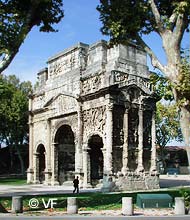
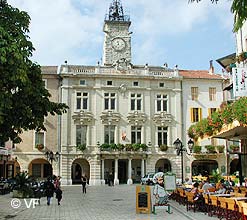
Around the ancient Theater the busy life of the city centre is animated every Thursday morning by the great Provençal market.
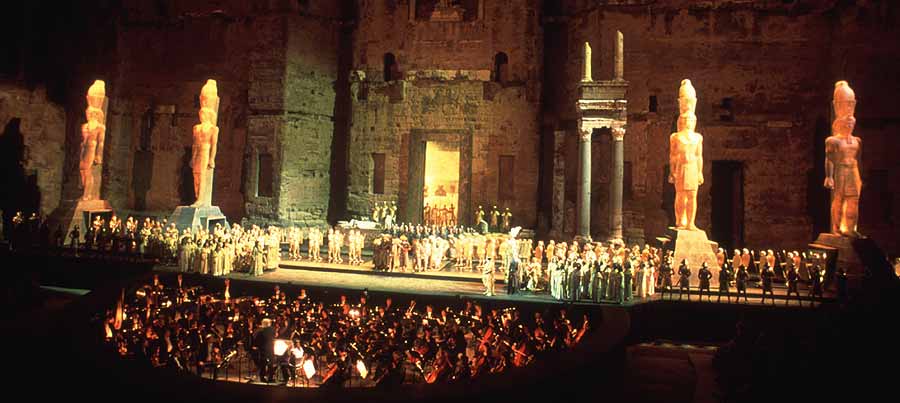
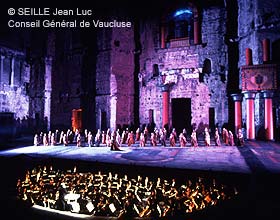
The city is also dedicated to Art, the Roman Theater in Orange thrills every summer when it welcomes the Chorégies, a prestigious Festival for Opera and lyrical Art, displaying international quality shows.
Roman Theatre of Orange
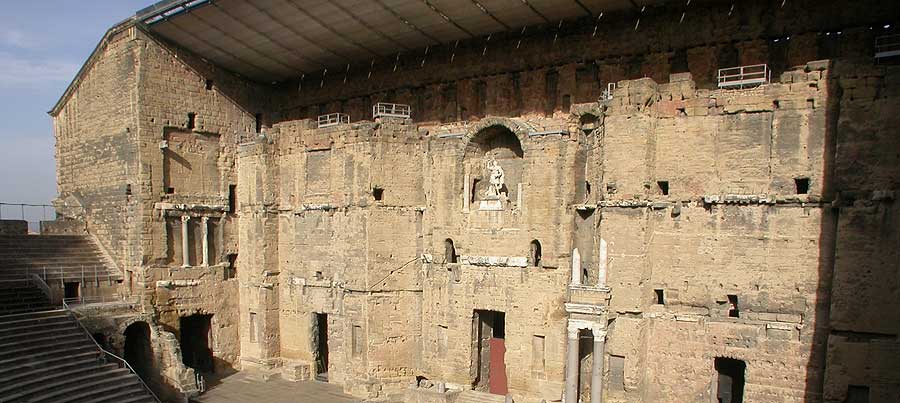
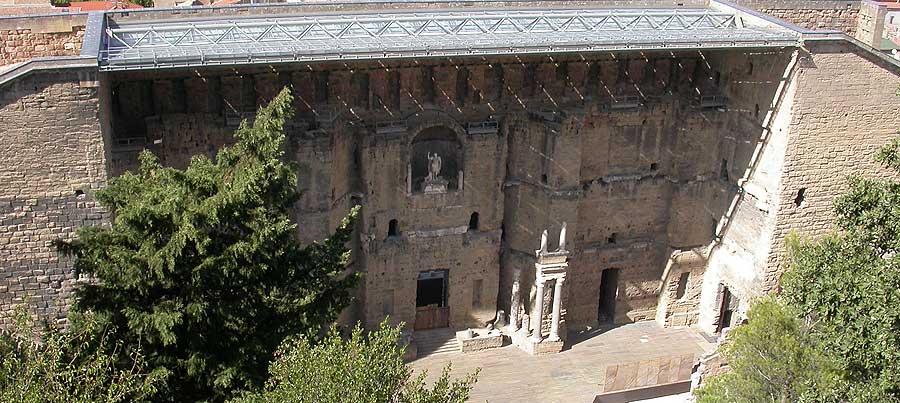
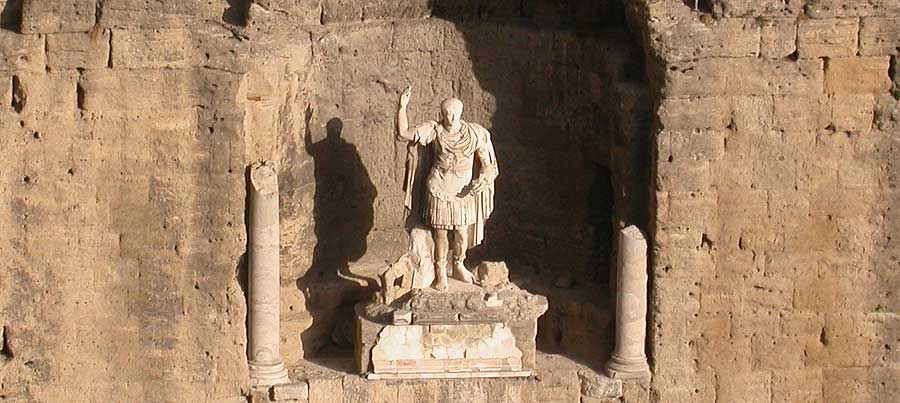
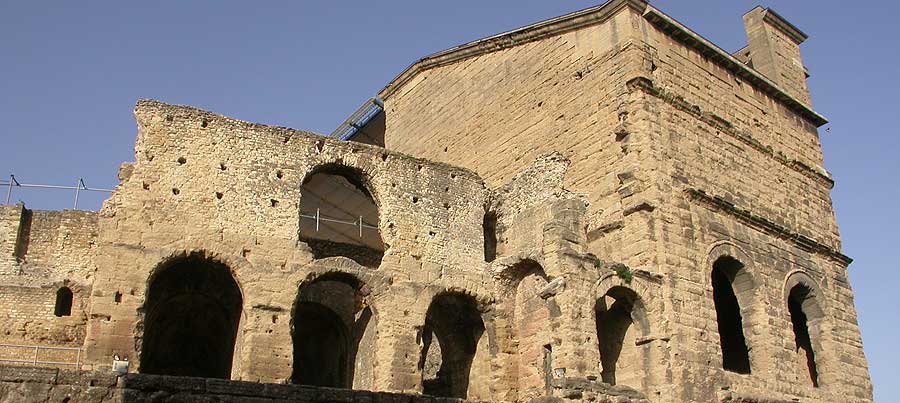
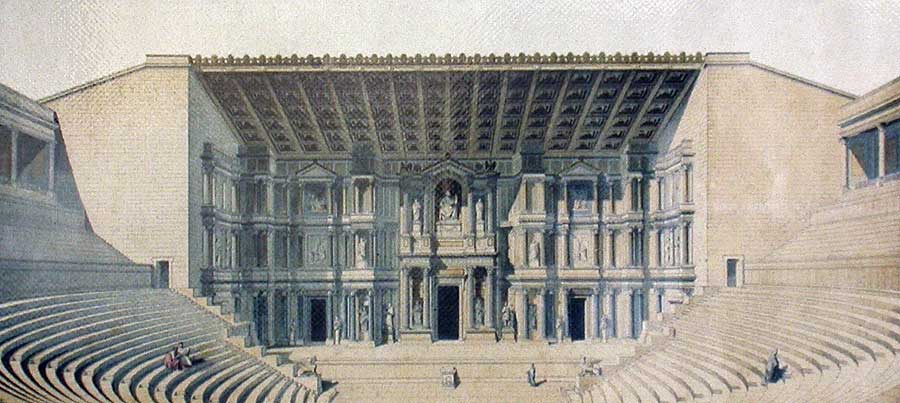
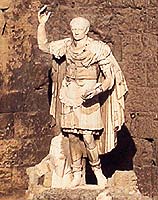
The Roman theatre in Orange is one of the most beautiful and well preserved theatres of antiquity. It was built soon after the settlement of the Roman city during the reign of the emperor Augustus, whose imperial statue adorns the stage wall.
The facade is the best preserved of all surviving Roman theatres. It is 103 metres wide and 37 metres high. The king of France Louis XIV described it as "the most beautiful wall of the kingdom".
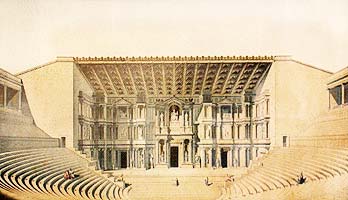 Reconstruction of the Roman theatre by Auguste Caristie, 1856,
Orange Museum of Art and History
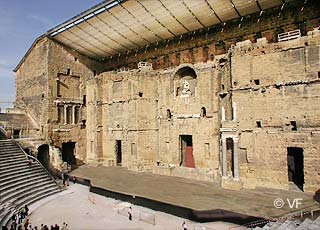
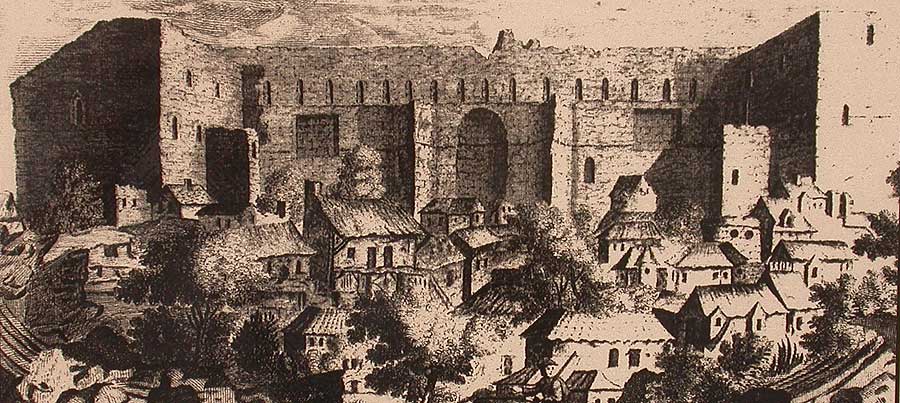
The ancient Theatre could hold up to 10 000 spectators to attend the performances. It was transformed into a fortress during medieval times, and later into a residential area, which probably preserved it from destruction.
A restoration program was launched in 1825 by Prosper Mérimée, the architect Auguste Caristie directed the works.
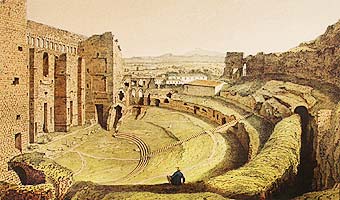
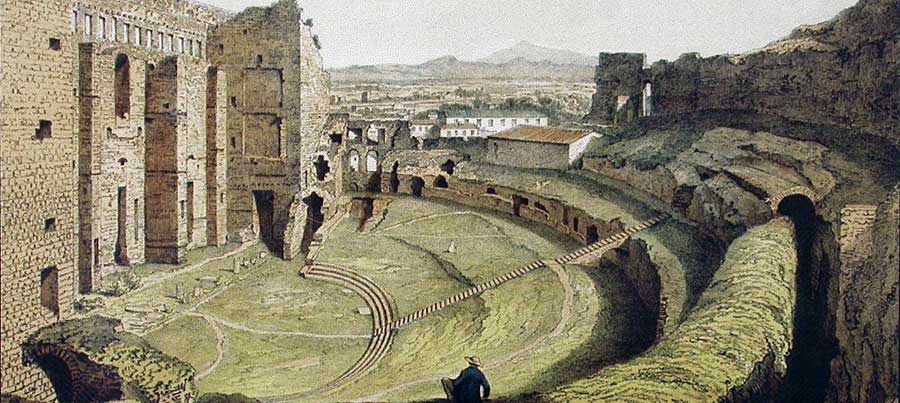
Interior view of the Roman theatre by Asselineau,
19th century, Orange Museum of Art and History
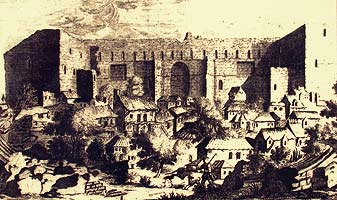
Interior view of the Roman theatre with houses,
by Pierre Fourdiguier, 18th century
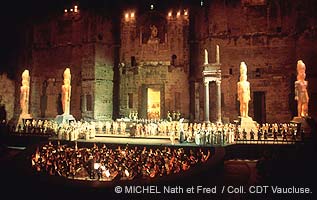 Since 1869, during the "Chorégies
d'Orange", Opera performances are given every summer in this
magical place with exceptional acoustics. The "Chorégies
d'Orange" are the oldest festival in France, the most renowned
artists have performed here in the ancient theatre dedicated to
lyric art, giving to this place an international artistic reputation.
Since 1869, during the "Chorégies
d'Orange", Opera performances are given every summer in this
magical place with exceptional acoustics. The "Chorégies
d'Orange" are the oldest festival in France, the most renowned
artists have performed here in the ancient theatre dedicated to
lyric art, giving to this place an international artistic reputation.
Orange, a Roman city
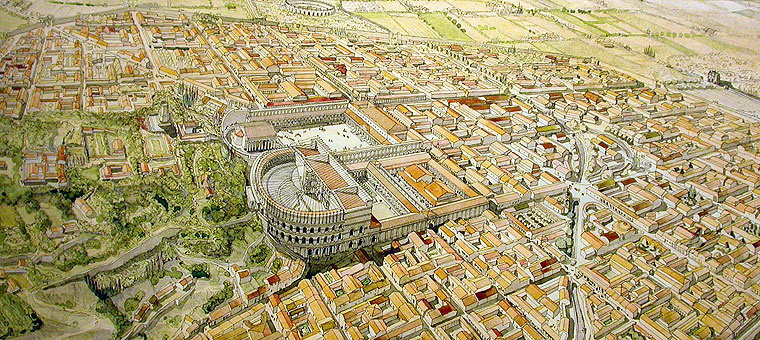
As a natural refuge, the Saint-Eutrope hill has been occupied since prehistoric times. Orange was, along with Avignon and Cavaillon, one of the main cities of the Cavares, the local Celto-Ligurian people, before the Roman settlement. A Castrum was built on the hill.
The Roman legions were defeated by Germanic tribes in 105 BC. General Marius drove out the Germanic invaders three years later.
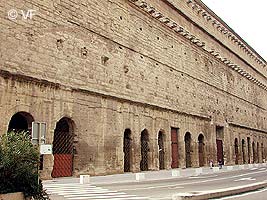
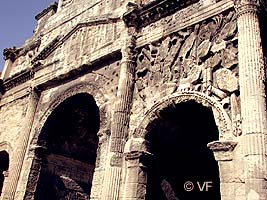
The town with Roman civic status Arausio was founded around 35 BC when Octavian settled the veterans of the second legion who fought with Julius Caesar during the Gallic campaigns. The town flourished and was adorned with impressive monuments : forum, baths, an aqueduct, city walls and of course the theatre and the triumphal arch at the northern gate of the city, celebrating the conquest of Gaul. Roman city par excellence, Orange displayed the superiority of the urban civilization brought by Rome.
The Princes of Orange Nassau
At the beginning, the legendary Guillaume au Court Nez (the short nose) was a companion of Charlemagne, celebrated in the chansons de geste of the Middle Ages. The cornet on Orange's arms is a tribute to him, it comes from his nickname (court nez).
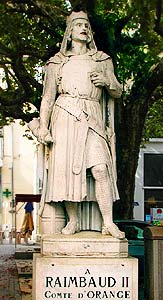
The first counts of Orange appear during the 11th century in the Chronicles : Rambaud II went with Godefroy de Bouillon on the First Crusade and distinguished himself in fighting in the Holy Land and entered Jerusalem.
In 1163, the Holy Roman Emperor Frederick I Barbarossa raised Orange to the rank of a principality. Through inheritance, the Principality of Orange passed to the House of Baux (1150-1393), then to the House of Chalon and, in 1544, to the House of Nassau.
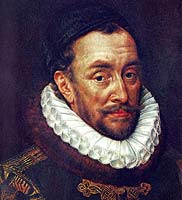 William the Silent, Prince of Orange Nassau
 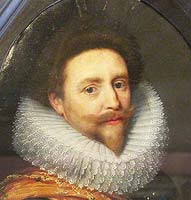 Philip William, Prince of Orange-Nassau
  Maurice, Prince of Orange Nassau
 William I, known as the Silent, became Prince of Orange in 1544 and stadtholder of several provinces of the Netherlands in 1559. He is considered by many as a national hero and the founder of the Dutch nation. Under his reign, Orange became a centre for the Reformation, the Catholic and Protestant communities fought for the control of the city. In 1562 and 1571, the Catholic troops plundered the city, perpetrating horrible massacres among the population.
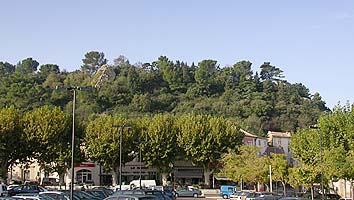
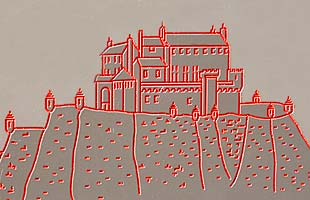
In 1620, Maurice of Orange-Nassau built a great fortress on Saint-Eutrope hill. The conflict between William III of Orange-Nassau and the king of France Louis XIV caused the incorporation of the Principality of Orange into the French kingdom, and the destruction of the castle.
There is practically nothing left from this mighty fortress, the ruins have long been covered by a pleasant wooded park. It's a very nice place for a stroll, which offers a splendid panorama on Orange and the surrounding region.
The heir to the Dutch throne bears the title Prince or Princess of Orange. Orange is the country’s national colour, worn by its national football team.
Accommodation in Orange
 Selection of B&B
in Orange amongst the B&B of Provence
Selection of B&B
in Orange amongst the B&B of Provence
Tourist Office web site : poptourisme.fr
Coming to Orange
GPS coordinates N 44°08'09'' - E 4°48'31''
Orange location : altitude 30 meters, 29000 inhabitants, 10 km from Châteauneuf-du-Pape, 19km from Cairanne, 20 km from Vacqueyras, 21 km from Gigondas, 29 km from Vaison-la-Romaine, 31 km from Avignon
Explore further with my articles in the Getaways section of the Guest Houses in Provence Portal: The Triumphal Arch of Orange.